The Acorn Plush Taught My Kids About Sharing

Last week, Liam and I went to Costco to pick up a few things for fall. It was one of those trips that starts with a short list and slowly stretches as you walk deeper into the store.
The entrance was already dressed for the season, long rows of pumpkins in warm yellow tones, deep orange throws folded neatly on tables, and shelves filled with candles that smelled like cinnamon and apple.
Shopping together without the kids always feels a little strange and a little nice.
We moved at our own pace, commenting on decorations we didn’t actually need but enjoyed imagining in the house.
There was a lightness to the trip, the kind that comes when routines pause for a moment. Then we wandered into the toy section.
It was massive, far larger than I remembered, with wide open space and towering displays that felt almost overwhelming.
Oversized boxes were stacked high, plush toys filled large bins, and the colors alone were enough to distract even adults like us. We both laughed at how easy it would be to get lost there.
That’s when Liam suddenly stopped walking.
“Honey, come here,” he said, his voice low and slightly amused, the way it gets when he’s found something unexpected.
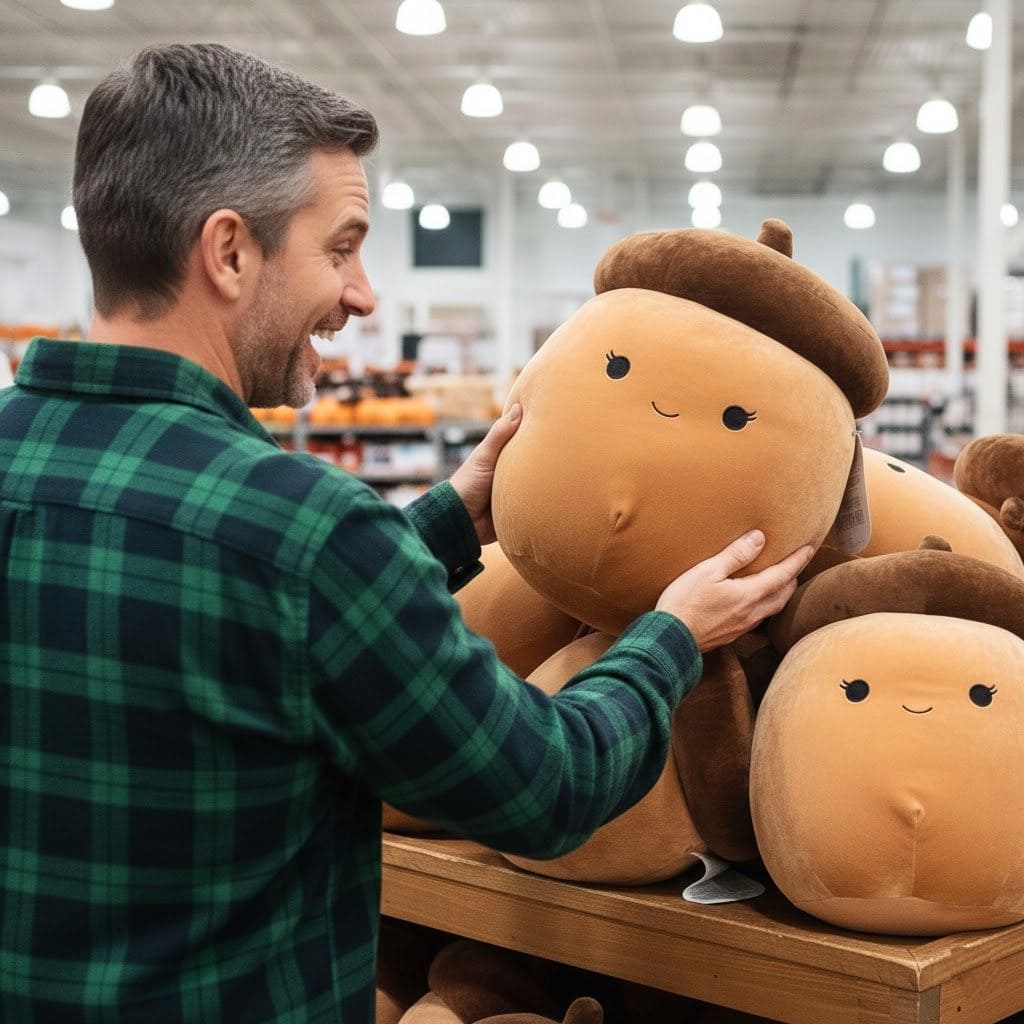
I turned and saw him standing in front of a large bin filled with plush toys, holding one up in both hands.
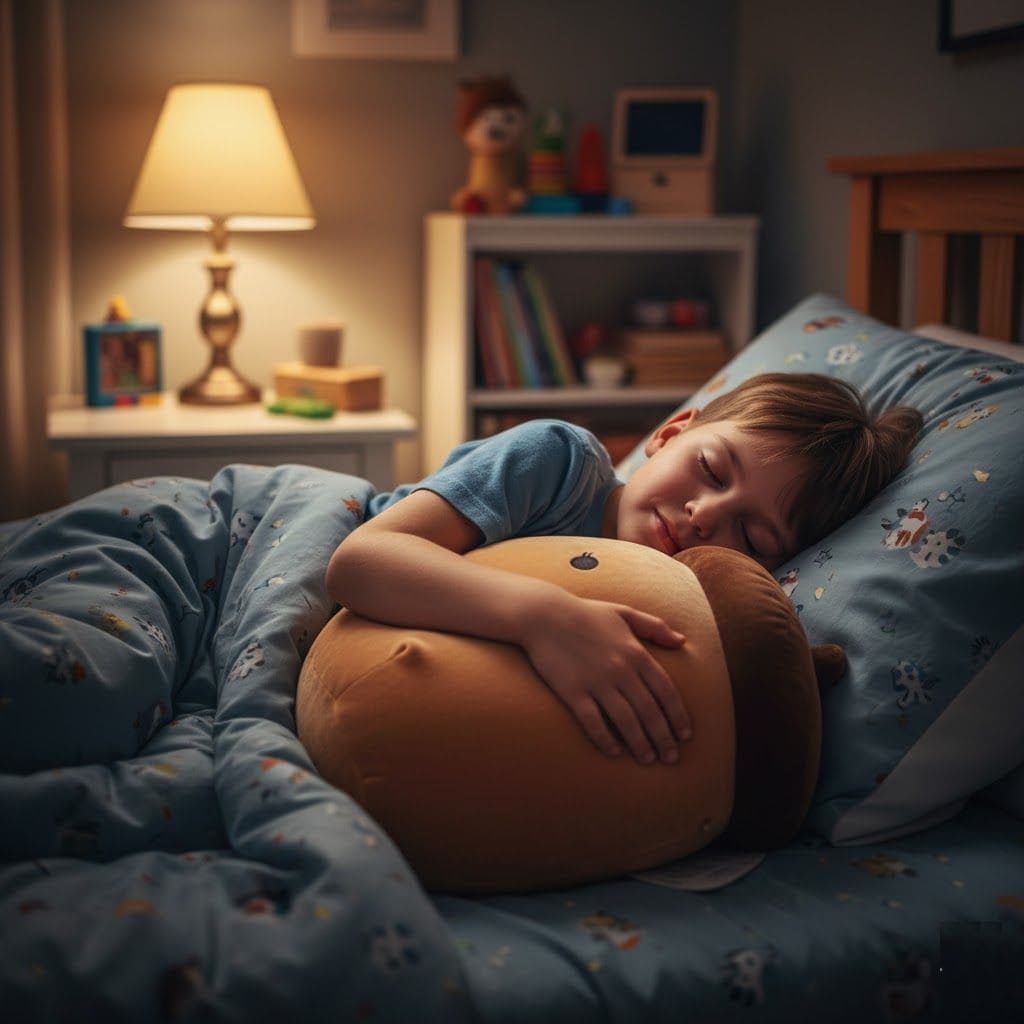
It was an acorn plush, about 16 inches tall, round and generously sized, with a soft brown body and a lighter tan cap stitched neatly on top.
The fabric immediately caught my attention. It wasn’t shiny or stiff, but covered in a short, velvety fur that felt warm and thick under your fingers, the kind of texture that makes you want to hug it without thinking.
The face was simple and sweet, small embroidered eyes, a gentle smile, nothing loud or exaggerated. It looked cozy in a way that felt perfect for fall.
Liam turned the tag toward me. The original price was $19.99, but it had been marked down for the seasonal sale to $12.97.
We looked at each other for a moment, both doing the same quick calculation in our heads. Three kids, one plush, under thirteen dollars, soft, neutral, and not tied to any specific character or trend.
“This might actually work,” Liam said, smiling.
We both imagined the kids playing with it together, tossing it on the couch, dragging it around the living room, maybe even using it as a pillow during movie night.
Without overthinking it, we put it in the cart and moved on.
From Excitement to Tears in Minutes
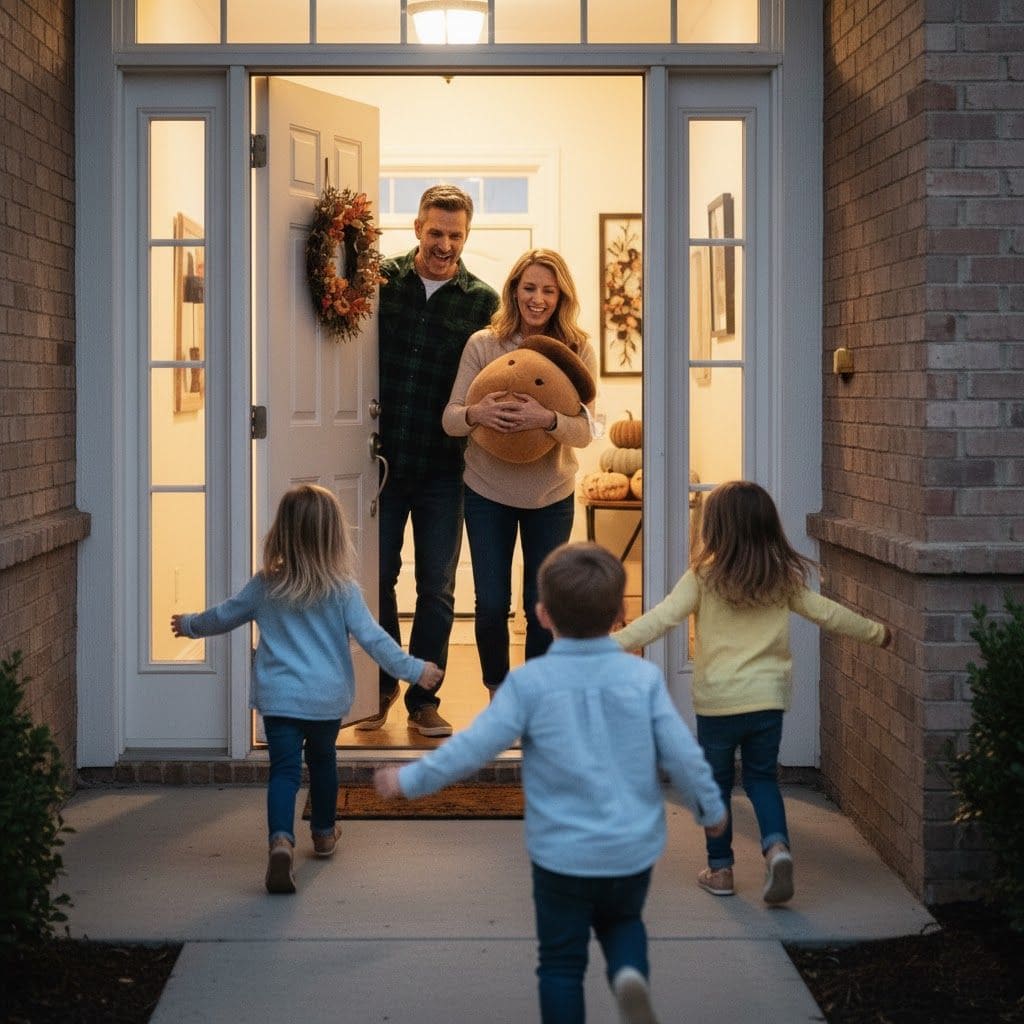
When we got home, the front door had barely opened before all three kids came running. Shoes were kicked aside, voices overlapping as they crowded around the cart.
“Mommy, what did you get?”
“Is that for us?”
“What’s in the cart?”
As soon as the acorn plush came into view, their excitement was instant.
Emma smiled wide and reached out gently. Claire grabbed the top without hesitation. Jack wrapped both arms around the middle like it might disappear if he let go.
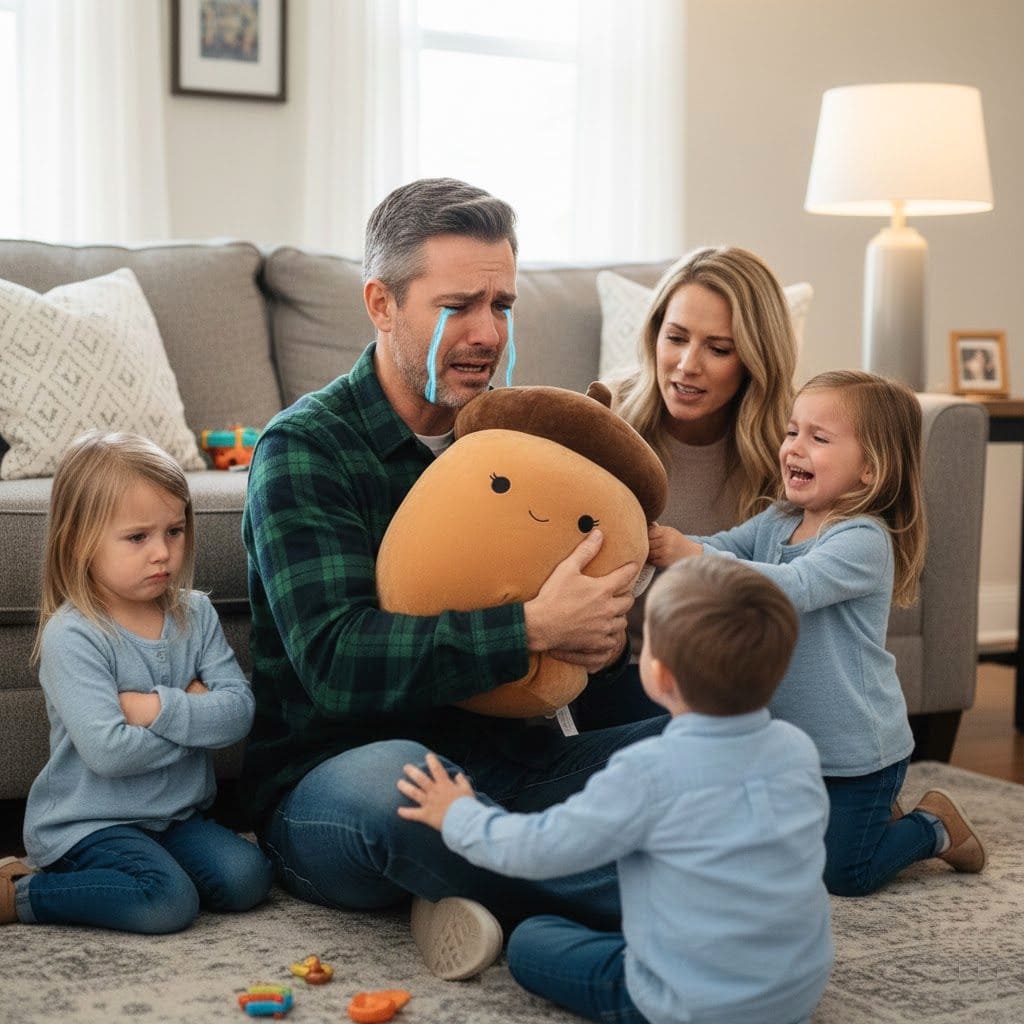
For a brief moment, it felt like one of those small parenting wins you don’t plan for. That moment lasted about three minutes.
Then Jack’s voice rose first, sharp and desperate. “It’s mine!” Claire responded immediately, just as loud, her hands tightening. “No, it’s mine! I took it first!”
The plush was now being pulled between them, and I could see the tension building fast.
Emma stood a step back, watching, her face falling slightly as she realized she wasn’t going to get a turn without conflict. She didn’t say anything, but the disappointment was clear.
Liam tried to step in calmly, suggesting they take turns, but the crying only grew louder. Jack dropped to the floor, clutching the acorn and screaming.
Claire’s frustration spilled out in sharp words. Emma stayed silent, which somehow made my chest tighten more than the noise.
In that moment, I felt the familiar exhaustion that comes with parenting. I’ve handled toy fights before, many times, but knowing what to do doesn’t make it emotionally easy.
I honestly thought of every mother I know and felt certain that raising children requires a level of strength we rarely give ourselves credit for.
How I Stepped In Without Making It Worse
Instead of reacting immediately, I paused. Not because I was calm, but because I’ve learned that jumping in too fast usually adds fuel to the fire.
I crouched down so I was at eye level with them and spoke slowly.
“I understand you’re upset,” I said to Jack first. “You really wanted to play with the acorn plush, and you don’t want to give it up.”
Then I turned to Claire. “And I understand you’re upset too. You were excited and you grabbed it first, and now it feels unfair.”
I didn’t ask who was right, or explain sharing in abstract terms. I simply named what they were feeling so they knew they were being heard. Then I set a rule.
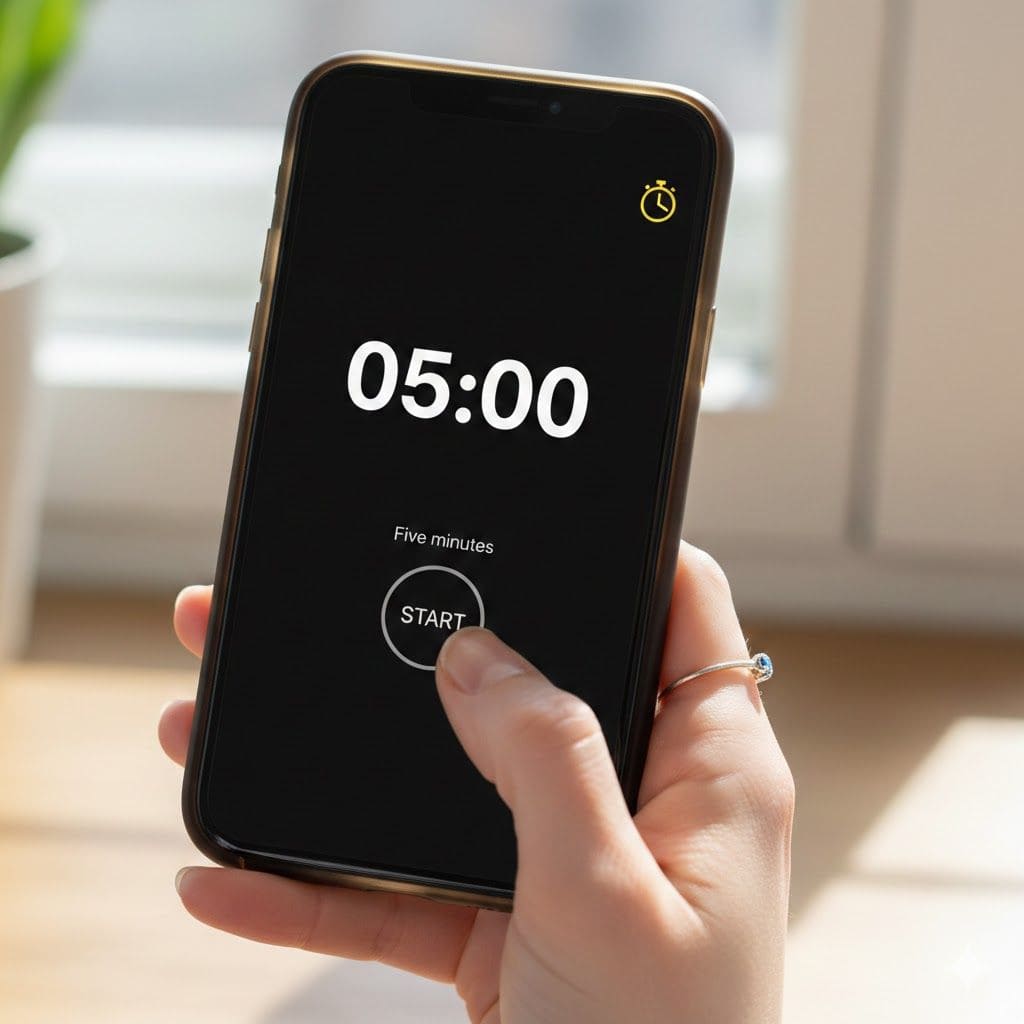
“This acorn plush is a shared toy,” I said clearly. “Each of you will get five minutes to play with it. I’m going to set a timer. When the timer goes off, the acorn goes to the next person.”
I pulled out my phone and showed them the timer before starting it. Five minutes, visible, clear, and the same for everyone.
Emma, as the oldest, got the first turn, not as a reward, but because she had stepped back without arguing.
The Timer Helped So Much
The timer took the pressure off me. I wasn’t the one deciding when playtime ended, and I wasn’t negotiating in the middle of big emotions. The sound of the timer became the rule, steady and neutral.
Emma played quietly, holding the acorn close, clearly enjoying it. Claire hovered nearby, watching and waiting. Jack sniffled but stayed close.
When the timer went off, Emma handed it over without protest. Claire took her turn, calmer now, and by the time it was Jack’s turn, the situation had softened into something manageable.
Later that night, Jack asked to keep the acorn longer when it was time for bed.
I repeated the same rule in the same calm tone, explaining that the acorn was a shared toy and that everyone would have another turn tomorrow. He protested briefly, but the consistency helped him accept it.
This Reminded Me As a Mother
This situation wasn’t really about the acorn plush, it was about fairness, boundaries, and helping my children feel understood even when they’re disappointed.
I didn’t solve it by making everyone happy. I managed it by staying consistent and calm, and by giving them a clear structure they could rely on.
Some days I handle moments like this better than others. This time, I got it right.
The acorn plush now sits in our living room, still being shared, still causing occasional debate, and quietly reminding me.