I Stopped Buying Yoga Mat Spray and Started Making My Own
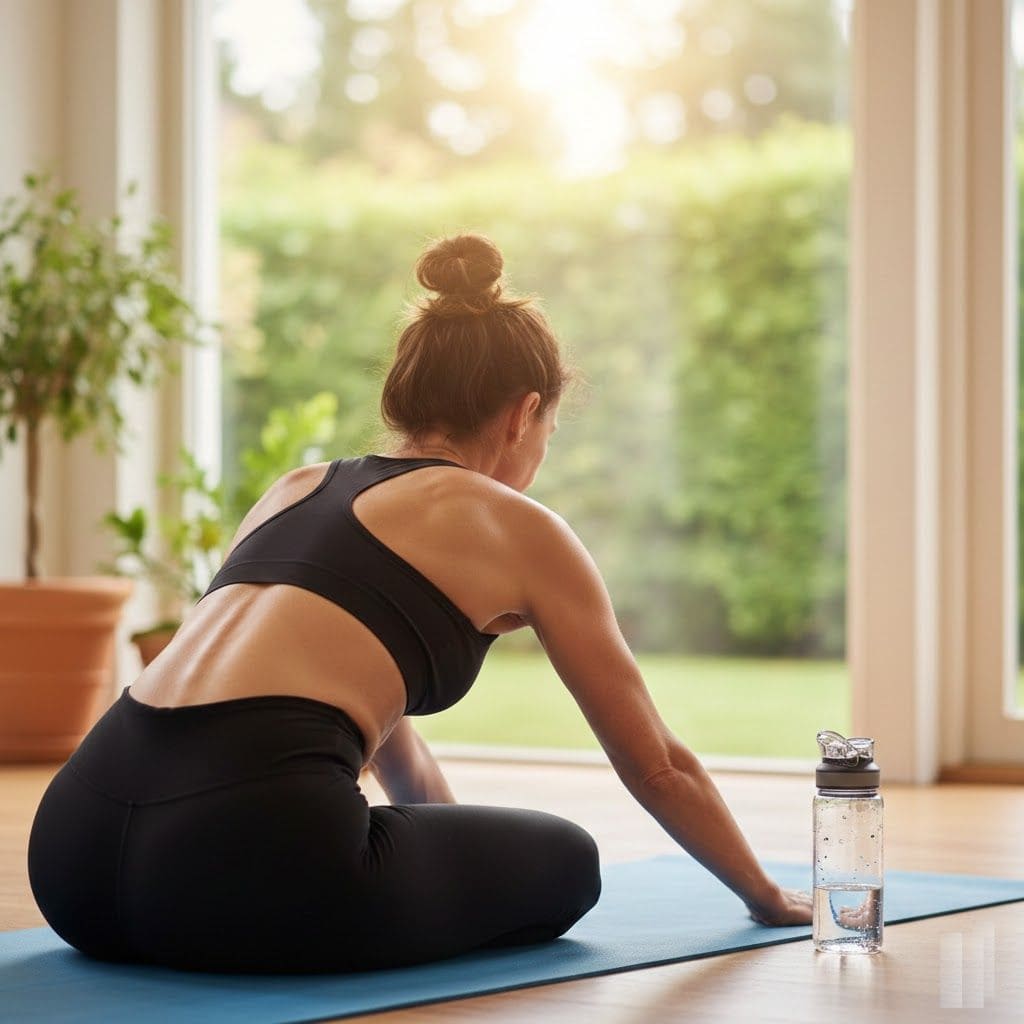
When I first began practicing yoga seriously, I owned one mat, one water bottle, and very little understanding of how much maintenance a yoga practice actually requires.
At the time, I thought yoga was simply about showing up, moving, breathing, and rolling the mat back up when I was finished. Cleaning it felt like an afterthought.
That changed quickly once I started practicing four or five times a week and eventually began teaching.
Over the years, I’ve owned five different mats. My very first was a simple PVC mat that cost about $35 from a local sporting goods store.
Later, when I became more invested in my practice, I upgraded to a natural rubber mat that had better grip and cushioning, which cost closer to $90.
When I started teaching online classes regularly, I kept one mat for personal practice and another for demonstrations on camera, and eventually I rotated between three mats depending on the intensity of the session.
With increased use came increased sweat, and with sweat came the reality that yoga mats hold more than just your body weight. They hold moisture, scent, and bacteria if you’re not careful. I learned that lesson slowly and slightly uncomfortably.
My Experience With Store-Bought Mat Sprays
Like most practitioners, I purchased yoga mat spray from the same place I bought my mat. The first bottle I bought was small, only four ounces, and cost $14.99.
The scent was lavender and eucalyptus, and at first I loved how clean it made my mat smell after class.
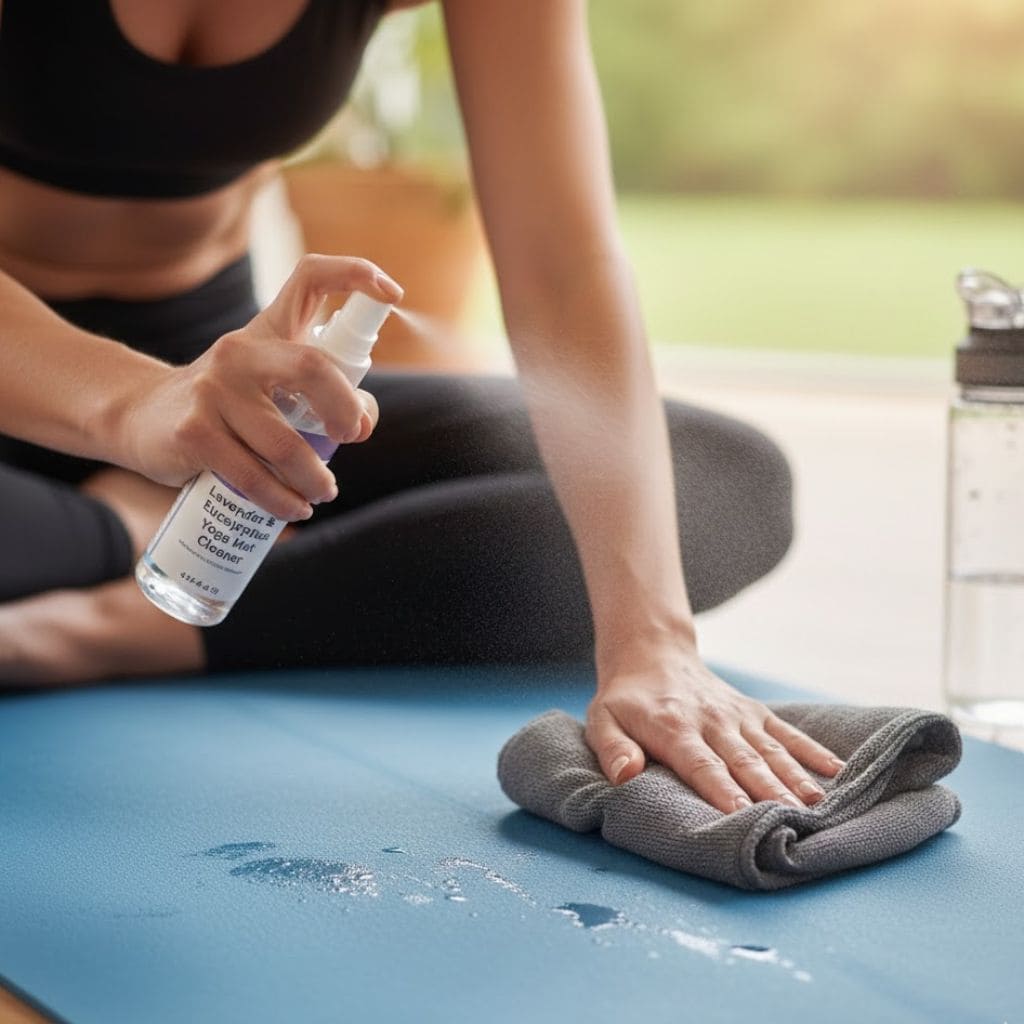
I would spray six or seven pumps across the surface, wipe it down carefully with a microfiber cloth, and let it dry before rolling it up.
For a while, that routine felt sufficient. However, as I began teaching multiple classes per week, I realized how quickly those small bottles disappeared.
If I used the spray after every practice and every teaching session, I would replace it roughly every three weeks.
That meant I was spending about $20 per month just to maintain my mats. Over the course of a year, that quietly added up to over $200.
More importantly, I started noticing small things that bothered me. Some sprays left a faint sticky residue if I used slightly too much.
Others had strong artificial fragrances that lingered in the room longer than I wanted, especially when I was teaching online and sitting close to the mat during demonstrations.
I also began reading labels more carefully and realized many brands contained synthetic fragrance blends instead of pure essential oils.
Understanding What a Yoga Mat Spray Actually Needs to Do
Before experimenting, I wanted to understand what the spray was truly meant to accomplish.
A good yoga mat spray should disinfect lightly, reduce odor caused by sweat, evaporate without soaking the material, and avoid breaking down the surface of the mat over time.
PVC mats can tolerate stronger alcohol-based cleaners. Natural rubber mats, which I prefer for grip and stability, are more sensitive and can dry out or crack if exposed to high concentrations of alcohol repeatedly.
Most commercial sprays rely on water as a base, a mild disinfectant such as alcohol or witch hazel, and essential oils for antibacterial properties and scent.
The Recipe I Now Use Consistently
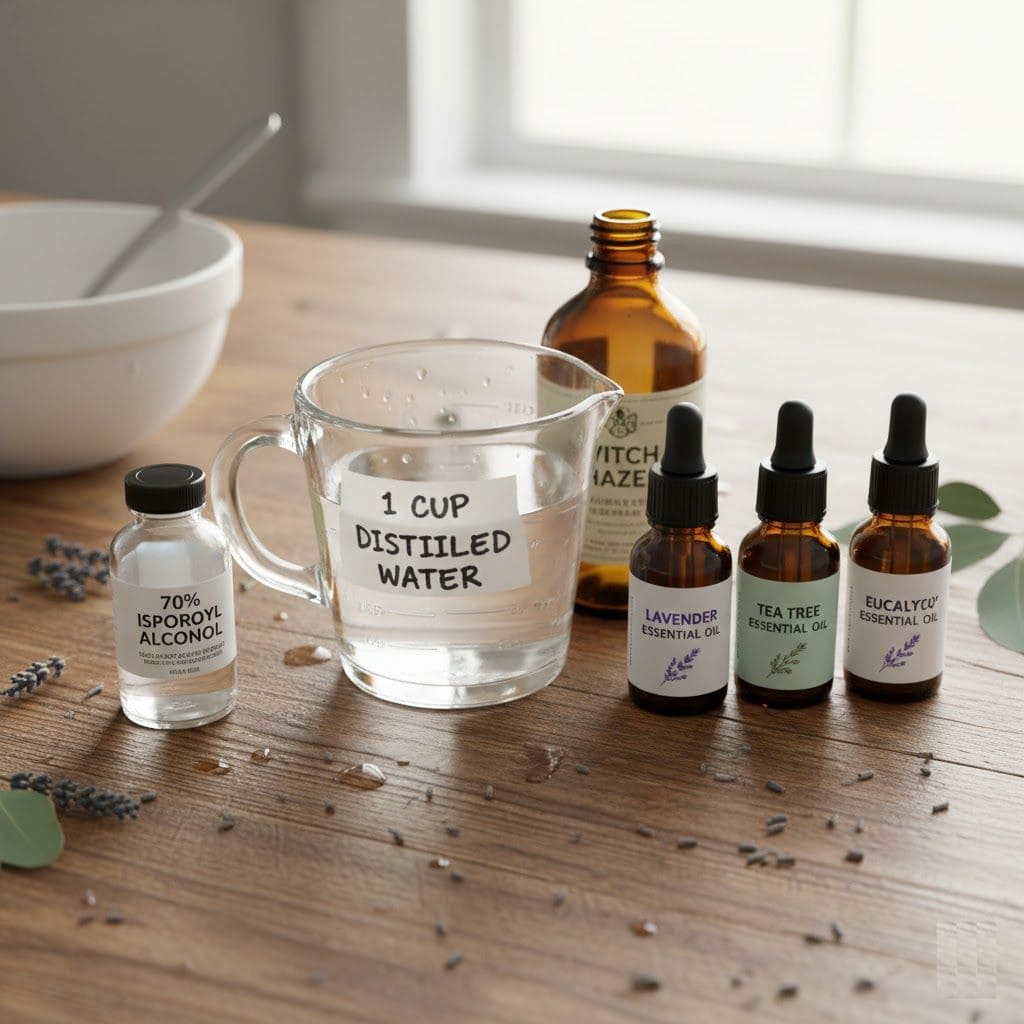
After testing a few variations, this is the formula I have used reliably for the past three years:
- 1 cup distilled water
- 2 tablespoons witch hazel (or 70% isopropyl alcohol for PVC mats)
- 8 drops lavender essential oil
- 5 drops tea tree essential oil
- 3 drops eucalyptus essential oil
I combine everything in an 8-ounce glass spray bottle. I prefer glass because essential oils can slowly degrade plastic over time, especially with repeated refills.
Distilled water is important because tap water can leave mineral residue on the mat’s surface. Witch hazel provides gentle disinfecting without being overly drying.
Tea tree oil offers natural antibacterial properties, while lavender softens the overall scent profile. Eucalyptus adds a clean brightness without overpowering the room.
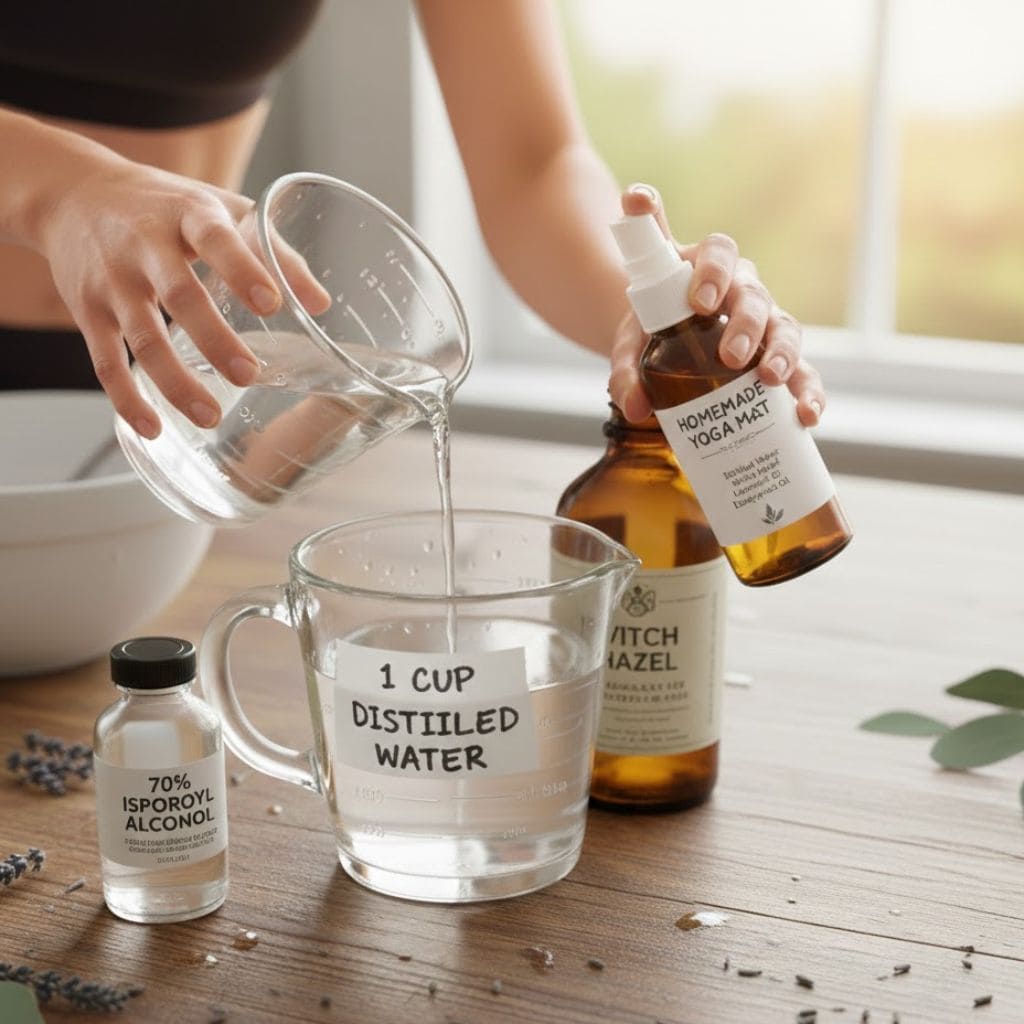
The initial investment in essential oils felt higher than buying one bottle of spray, but each oil lasts months, sometimes nearly a year, depending on frequency of use.
Once those are in your cabinet, each refill costs only a few dollars.
How I Use It After Practice
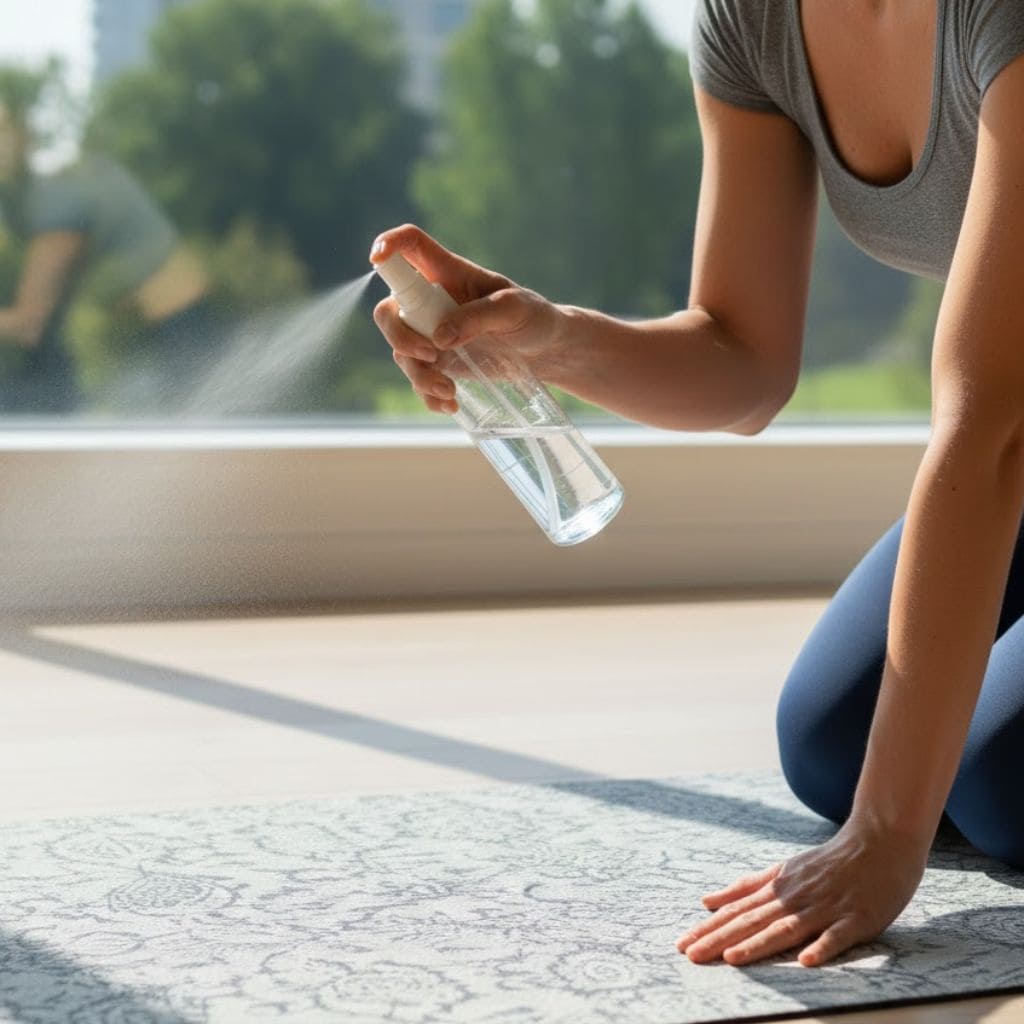
After every session, particularly if it was strength-focused or heated, I lightly mist the mat from about one foot away, using six to eight sprays across the surface.
I avoid soaking in any one area. The key is a fine, even mist.
I wipe the mat gently using a clean microfiber cloth in slow circular motions, paying extra attention to areas where my hands and feet were planted for long periods.
Then I allow the mat to air dry completely before rolling it up, which usually takes about ten minutes in a well-ventilated room.
For deeper cleaning, about every two weeks, I spray slightly more generously and allow the solution to sit on the surface for two to three minutes before wiping it down.
This gives the witch hazel and tea tree oil a little more time to work without saturating the mat.
How I Adjust the Scent Seasonally
One of my favorite parts about making my own spray is the ability to adjust the scent depending on the season and my mood.
In summer, when classes feel lighter and more energizing, I increase eucalyptus slightly and sometimes add one drop of lemon oil for brightness.
In colder months, I lean toward lavender and occasionally add one drop of frankincense for warmth and grounding.
The scent remains subtle. I never want it to dominate the room or distract from practice.
Important Considerations
If you are using a natural rubber mat, avoid increasing alcohol concentration. Repeated heavy use of alcohol can dry out the material over time.
Always test your spray in a small corner first if you are unsure about compatibility.
Essential oils should be used conservatively as too many drops can leave residue and potentially make the mat slippery, which defeats the purpose entirely.
If you have pets or very small children, store the spray securely and ensure the mat is fully dry before allowing anyone to sit or lie on it.
What Changed When I Switched
After switching to my homemade version, I noticed that my mats maintained their grip longer and developed less persistent odor over time.
The room felt cleaner without smelling perfume. My cleaning routine became less about consumption and more about intention.
Perhaps the biggest change, though, was psychological. Making my own spray felt aligned with how I approach yoga itself.
Yoga, for me, has always been about simplifying, removing excess, and returning to essentials.