
I Never Skip My Routine Lab Work
For many years now, I have made it a habit to schedule routine blood work twice a year.
I invest time in eating well, sleeping enough, and maintaining regular movement through yoga, yet I have learned that even the most disciplined routines cannot reveal everything happening internally.
Some imbalances develop slowly and silently, without dramatic symptoms, and the only way to recognize them early is to look at the data.
This year, however, I nearly postponed my appointment. The calendar filled quickly.
Emma needed extra emotional support at school, my teaching hours shifted slightly, and the usual winter tasks began stacking up in small, manageable ways that still consumed time.
I told myself that because I felt normal, there was no urgency. I was not dizzy, I was not fainting, I was not visibly unwell. That reasoning felt practical at the moment.
The Morning of My Appointment

Yesterday morning at 8:15 a.m., I drove to Atlantic Medical Group Primary Care in Summit, New Jersey, where I have completed my annual and semiannual exams for years.
The sky was pale and clouded, the kind of winter morning where the air feels crisp enough to wake you fully before you even step inside the building.
The waiting room was quiet, with soft overhead lighting and muted holiday decorations near the front desk.
I checked in, confirmed my information, and sat down for about fifteen minutes before a nurse called my name.
She measured my blood pressure first, which came in at 116/72, well within my typical range. My resting heart rate was 68 beats per minute. On the surface, everything appeared stable.
They drew several tubes of blood for a comprehensive panel that included a complete blood count, iron studies, ferritin levels, vitamin D, a lipid panel, thyroid markers, and a basic metabolic panel.
The entire visit lasted less than half an hour, and I drove home feeling calm, fully expecting that my results would look similar to previous years.
What the Numbers Showed
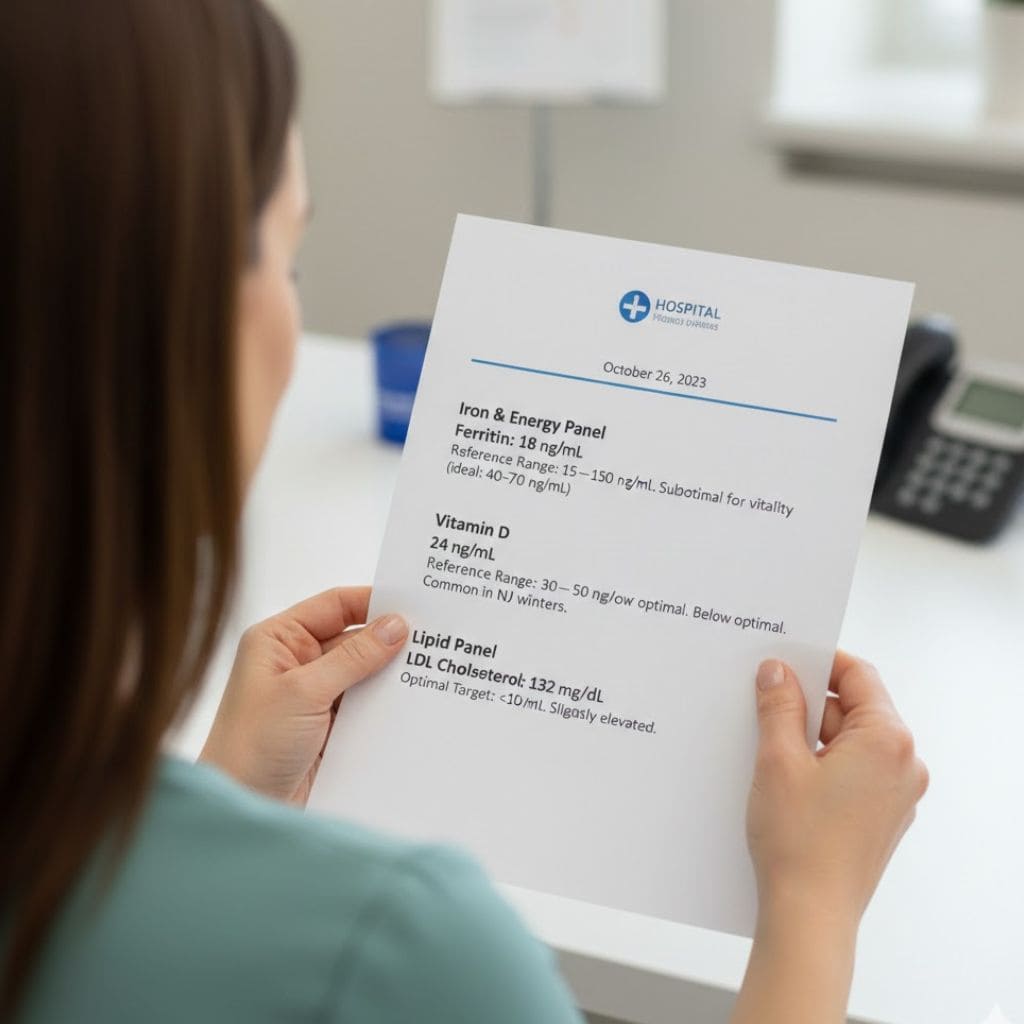
Two days later, I logged into my patient portal and reviewed the results carefully, line by line.
My ferritin level measured 18 ng/mL, technically within the laboratory’s reference range of 15-150 ng/mL for women, yet on the lower end of what many clinicians consider optimal for sustained energy and hair health.
Ideally, ferritin levels closer to 40-70 ng/mL tend to support better vitality.
My vitamin D level came back at 24 ng/mL, below the recommended 30-50 ng/mL range.
Living in New Jersey, especially during fall and winter months when sunlight exposure is limited, this deficiency is not uncommon, but it still matters.
My LDL cholesterol registered at 132 mg/dL, slightly higher than the optimal target for someone without major cardiovascular risk factors.
It was not alarming, but it signaled room for improvement.
Connecting Symptoms I Had Overlooked
When I reflected honestly, I realized that my body had been offering small hints.
In the late afternoons, even on days when I had slept eight hours, I sometimes felt a mild dip in energy that seemed disproportionate to my activity level.
My hands occasionally felt colder than usual, especially while preparing dinner.
I had also noticed increased hair shedding when brushing, though I had attributed it to seasonal change.
Low ferritin can contribute to fatigue, cold sensitivity, and hair thinning, even when hemoglobin levels remain within normal limits.
Vitamin D deficiency may affect immune function, mood stability, and bone health. Slightly elevated LDL cholesterol often reflects dietary patterns over time rather than sudden changes.
What surprised me most was not that something was off, but that I had normalized these small signs.
How I Responded

To address iron levels, I began incorporating iron-rich foods more intentionally into my weekly plan.
I added grass-fed ground beef once per week, lentils twice weekly, and spinach sautéed lightly with olive oil and lemon juice to enhance iron absorption.
Pairing iron-rich foods with vitamin C sources, such as bell peppers or citrus, improves uptake significantly.
My physician recommended a low-dose iron supplement of 18 mg daily for three months, taken with food to reduce digestive discomfort, which I agreed to monitor carefully.
For vitamin D, I made a conscious effort to step outside during midday light whenever possible, even for short walks.
I increased fatty fish intake, particularly salmon twice weekly, and continued eating whole egg yolks from pasture-raised hens, which naturally contain vitamin D.
I also began taking a 2,000 IU vitamin D3 supplement during winter months under medical guidance.
To support cholesterol improvement, I replaced some red meat meals with baked salmon or mackerel, increased soluble fiber through oats and chia seeds, and reduced processed snack foods that had quietly crept into busier weeks.
Why Routine Labs Matter More Than We Think

Without routine testing, I would not have recognized these shifts until symptoms potentially intensified.
Iron deficiency often progresses gradually, vitamin D levels decline seasonally without obvious warning, and cholesterol trends upward quietly over years.
As mothers, we prioritize pediatric appointments, dental cleanings, and school physicals, often scheduling our own health checks last. Yet our well-being forms the foundation of the household.
What I Want Other Women to Consider
If you feel generally fine, that does not mean everything internally is optimal. Even small imbalances can affect long-term energy, mood, and resilience.
Annual blood work, and sometimes biannual monitoring depending on personal history, allows for early course correction.
Ask specifically about ferritin, vitamin D, and lipid trends rather than relying solely on basic hemoglobin results. Trends over time often matter more than isolated values.
Yesterday, as I closed my patient portal, I felt empowered.
My body had offered quiet data, and I had listened before it demanded louder attention.