I Designed The Entrance Door for Three Kids
If there was one place in my house that quietly controlled my mood more than I liked to admit, it was the entrance door.
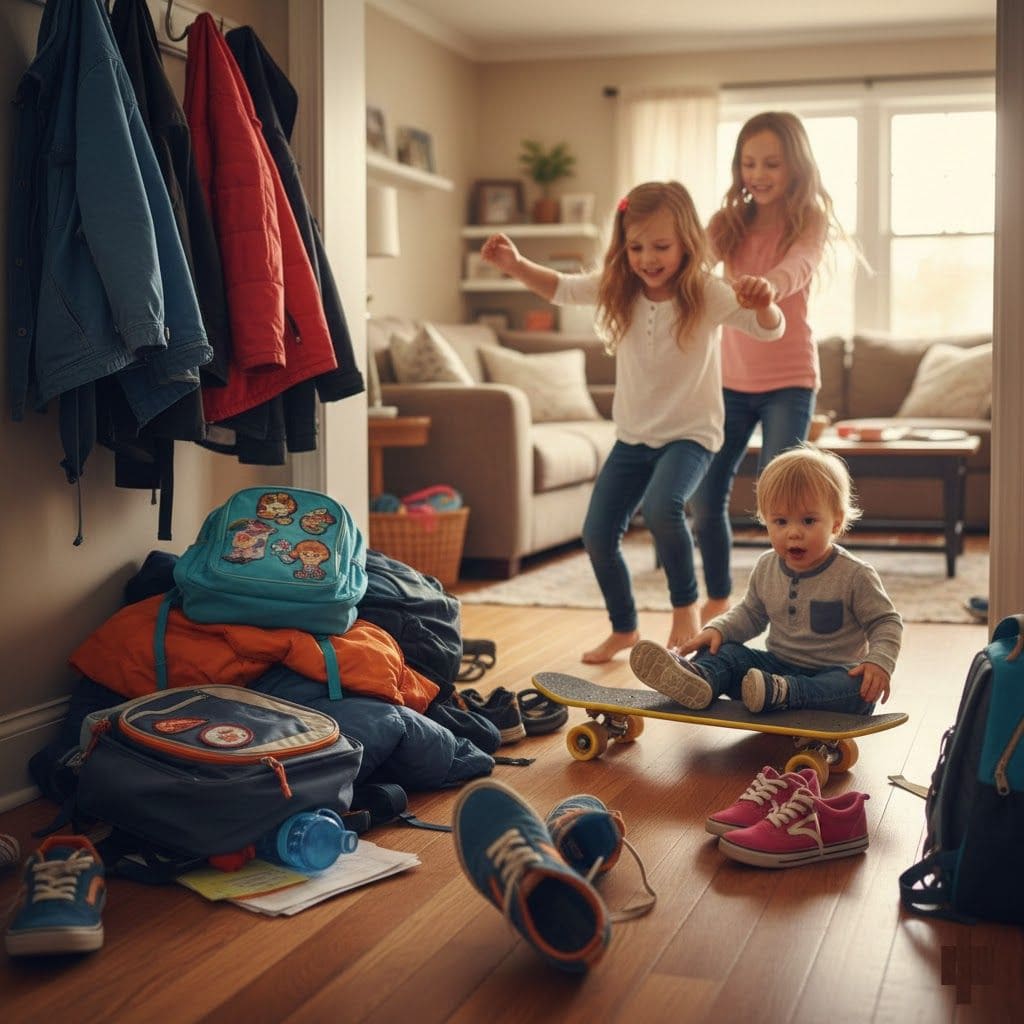
Every afternoon around 3:20 p.m., the front door would swing open and the same scene would unfold.
Shoes were kicked off mid-step, backpacks slid down shoulders and landed wherever they fell, jackets slipped from hooks that were already overcrowded, and someone inevitably tripped over something that shouldn’t have been there in the first place.
When Jack was still learning to walk, the situation was even more chaotic.
He would wobble in behind his sisters, step directly onto Claire’s sneaker, lose his balance, and sit down in the middle of the doorway as if the entire entrance had become his personal play zone.
The entrance itself is not large. It measures roughly five feet wide and perhaps four feet deep before it opens into our living room, and there are no built-in closets or hidden storage spaces that can quietly swallow the clutter.
For years, I told myself that this mess was simply part of raising three children, and that expecting order in such a small area was unrealistic.
But once Jack grew steadier on his feet and started kindergarten, I began to notice that the chaos wasn’t entirely about the children’s energy.
What It Looked Like Before
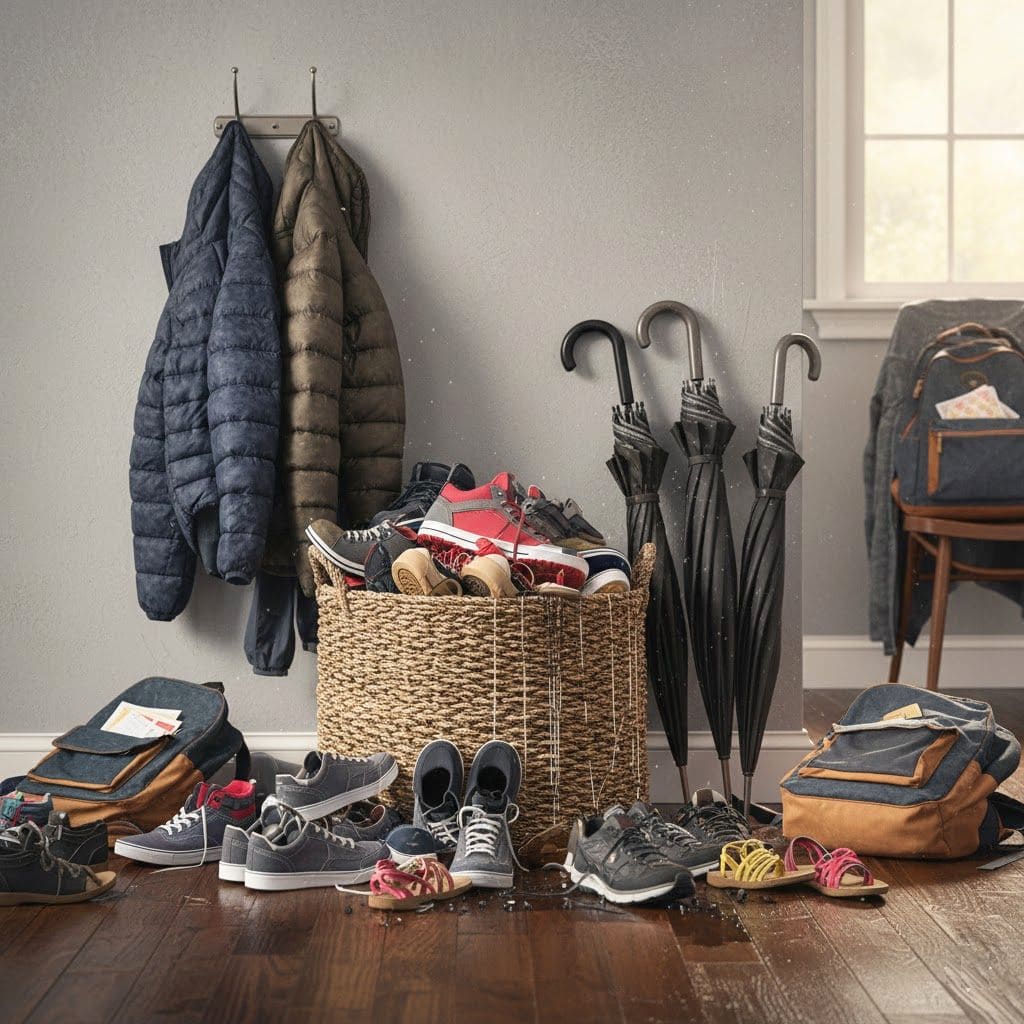
Before I made any changes, the entrance had a woven basket sitting against the wall, and that basket was supposed to hold everyone’s shoes.
In reality, it overflowed constantly, because no one wanted to dig through layers of sneakers to find their own pair, and every search created an avalanche of scattered footwear across the floor.
There was a single coat hook mounted near the door, which meant that jackets were stacked awkwardly on top of one another until they inevitably slid off.
Umbrellas leaned against the wall in a loose cluster, dripping quietly on rainy days, and backpacks were abandoned wherever gravity decided they should land.
Some afternoons I found Emma’s homework folder wedged beneath Jack’s boots, and other days Claire’s scarf disappeared completely until we located it two days later under the entry mat.
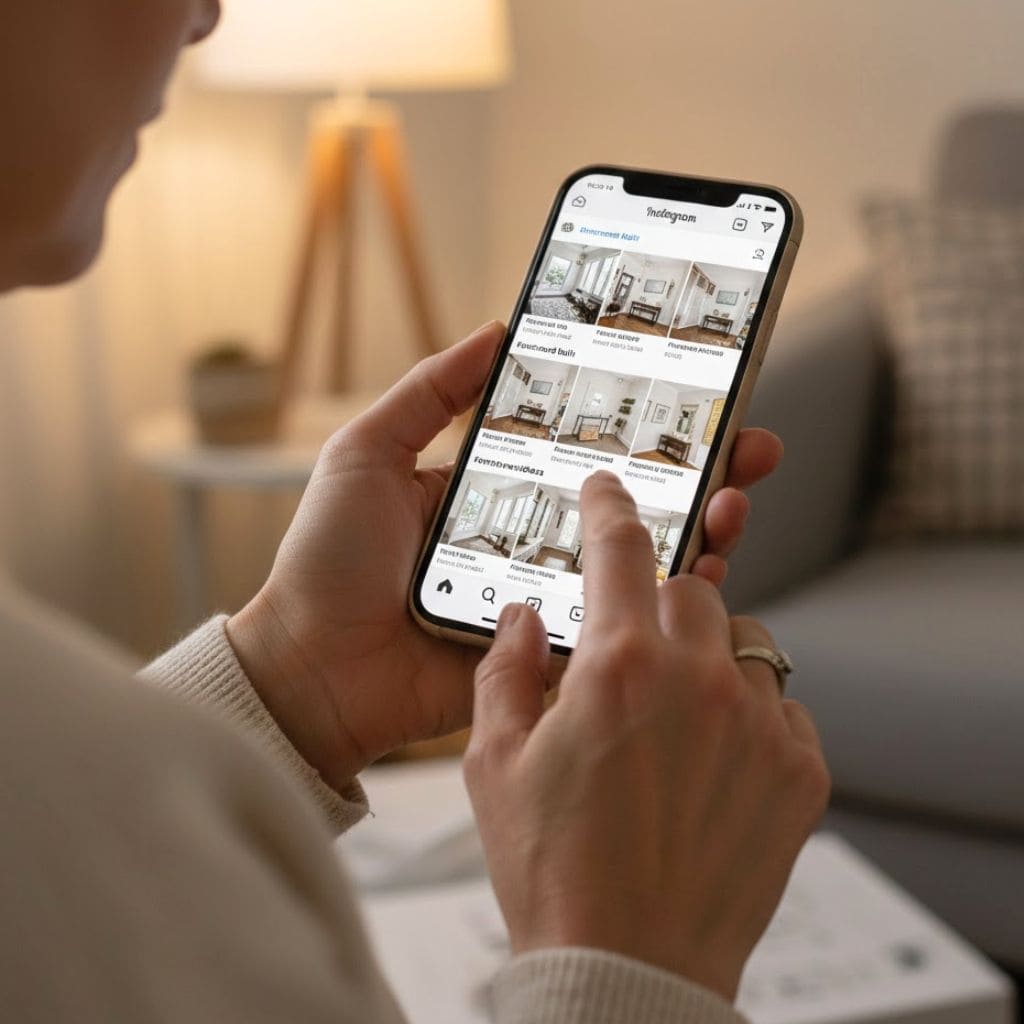
I began to realize that every time I stepped through that door, my shoulders tightened slightly. The entrance wasn’t just messy, it felt like friction.
So after the children were asleep, I started looking online at small family homes and mudroom designs that didn’t require full renovations.
What I noticed repeatedly was not luxury or expensive cabinetry, but clarity. Shoes stored low, hooks mounted at child height, and individual spaces clearly defined.
The Day I Went to Buy the Crates
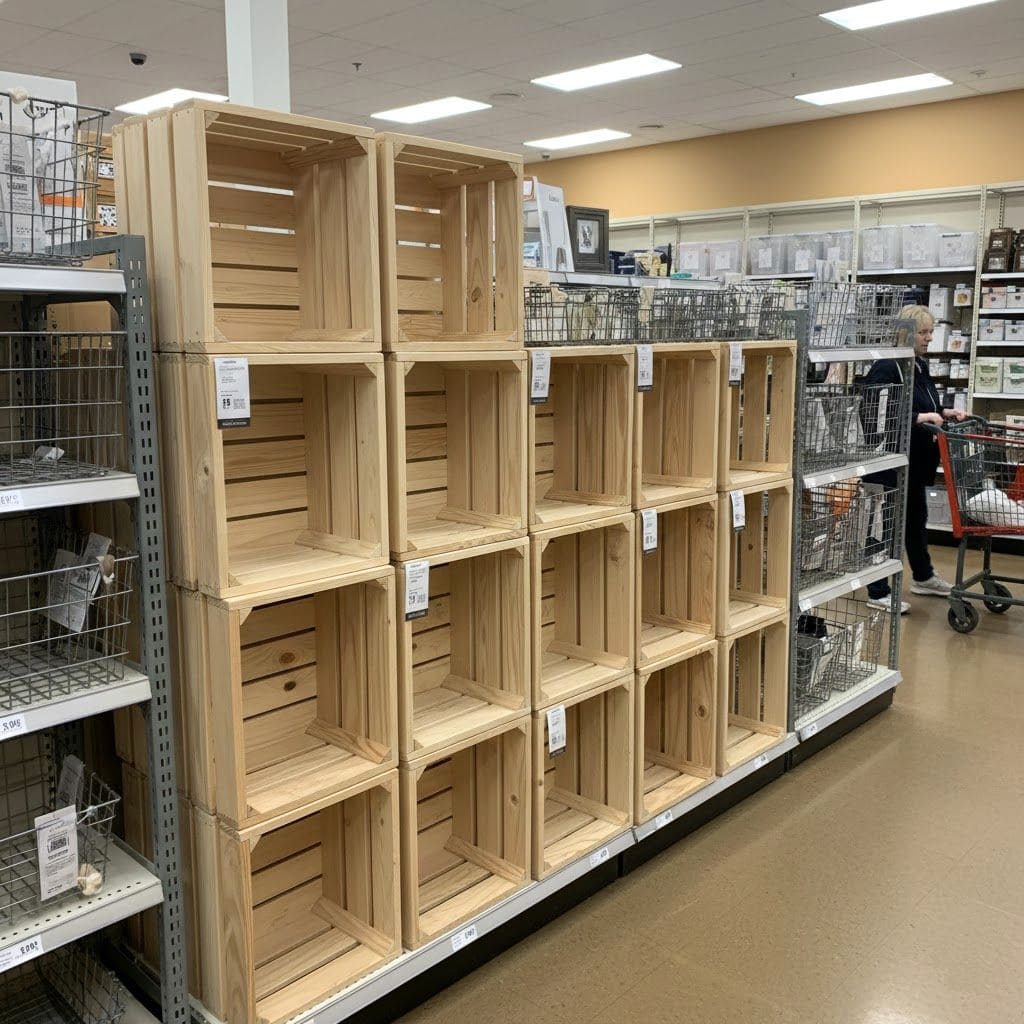
A few days later, after school drop-off, I drove to HomeGoods in Springfield. I knew stacking tall storage would make the space feel cramped, so I looked for something horizontal and grounded.
In the storage aisle, I found wooden crates stacked neatly in a display, made of natural pine with a light unfinished surface that felt smooth but not glossy.
Each crate measured about eighteen inches wide, twelve inches deep, and ten inches high, which meant five placed side by side would stretch across most of the wall without overwhelming it.
I picked one up to test its weight and sturdiness, imagining shoes being pushed inside daily without care.
They were $14.99 each, and after standing there for a moment calculating the total in my head, I placed five into my cart.
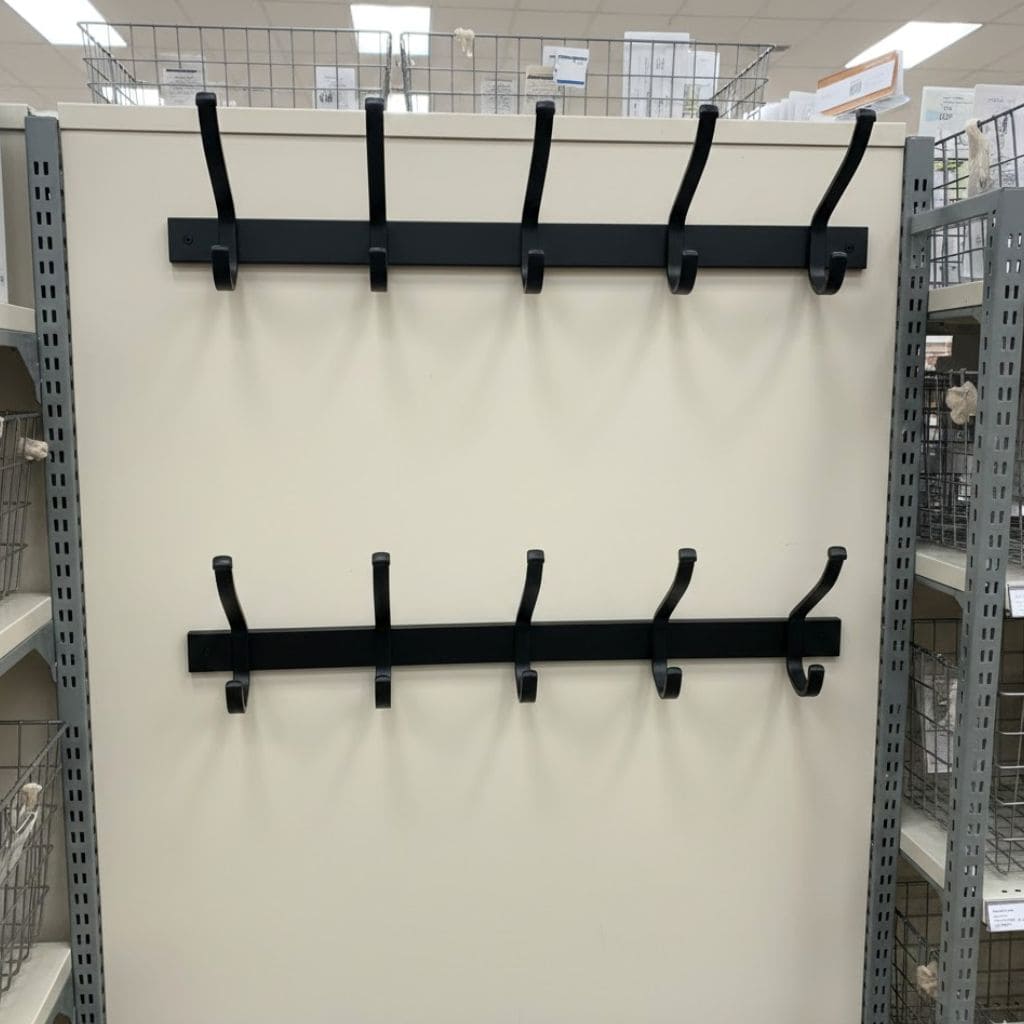
In the same aisle, I found two matte black wall-mounted coat racks with five evenly spaced hooks on each, each about twenty-four inches long.
They were simple and solid, priced at $19.99 each, and I could already picture them aligned above the crates.
By the time I checked out, I had spent just under $120.
Assembling the Entrance
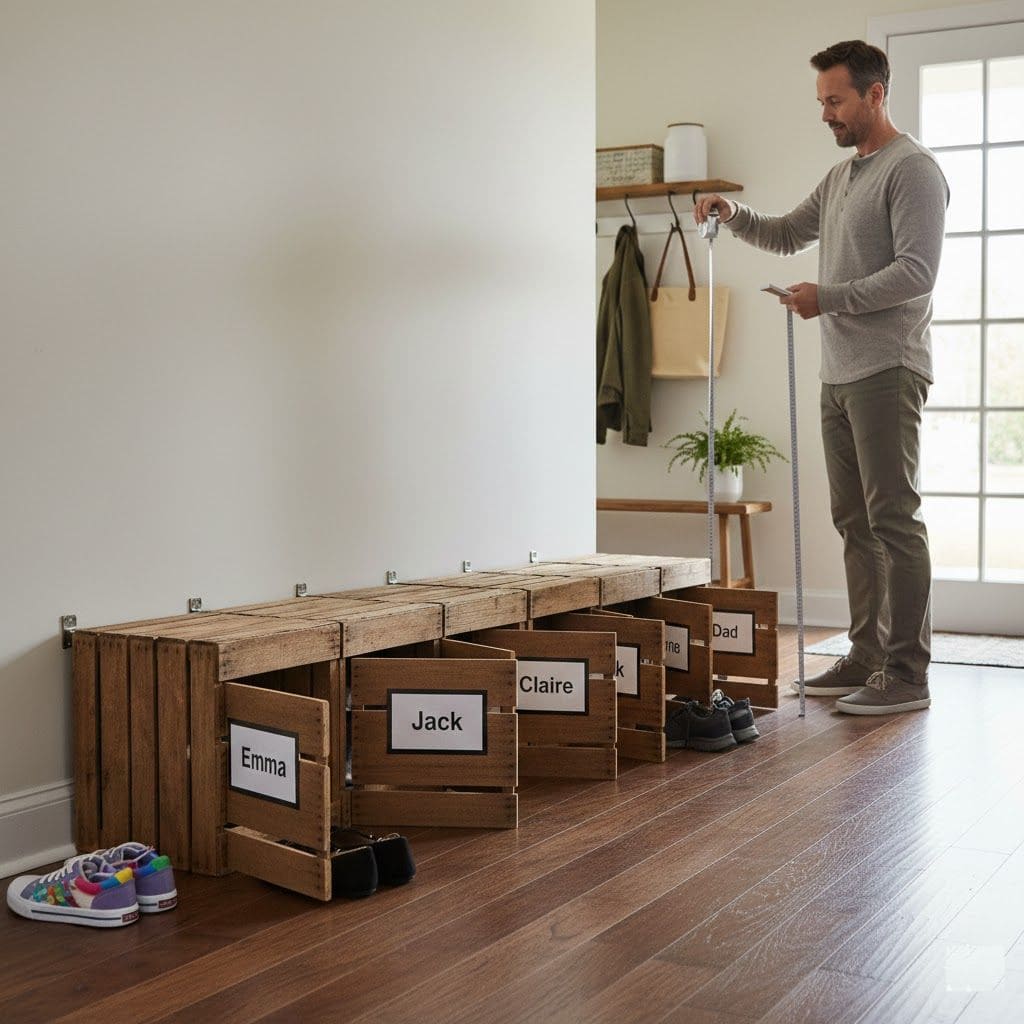
That afternoon, Liam and I measured the wall carefully, double-checking spacing.
We arranged the five crates directly on the floor in a straight horizontal line, securing them together at the back with small L-brackets so they would not shift apart when shoes were tossed in quickly.
Inside each crate, I attached a simple white label with black lettering that read Emma, Claire, Jack, Mom, and Dad.
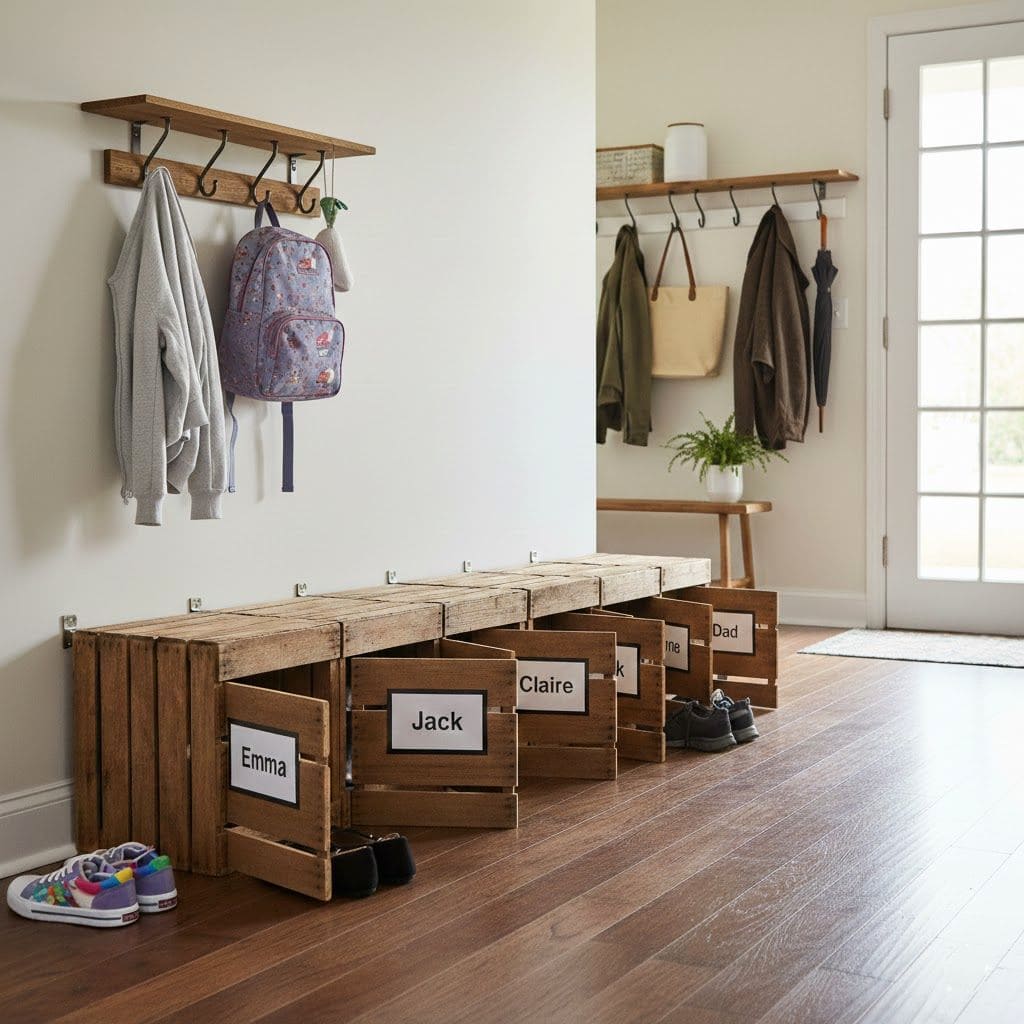
Above the crates, we mounted the first coat rack at about forty-eight inches from the floor so the children could reach it comfortably without stretching or asking for help.
The second rack was installed higher, around sixty-five inches, where Liam and I could hang heavier coats and umbrellas without crowding the children’s space.
Liam located the wall studs carefully before drilling, reinforcing the racks with anchors because winter coats can carry surprising weight, especially when damp.
The First Afternoon With the New Setup
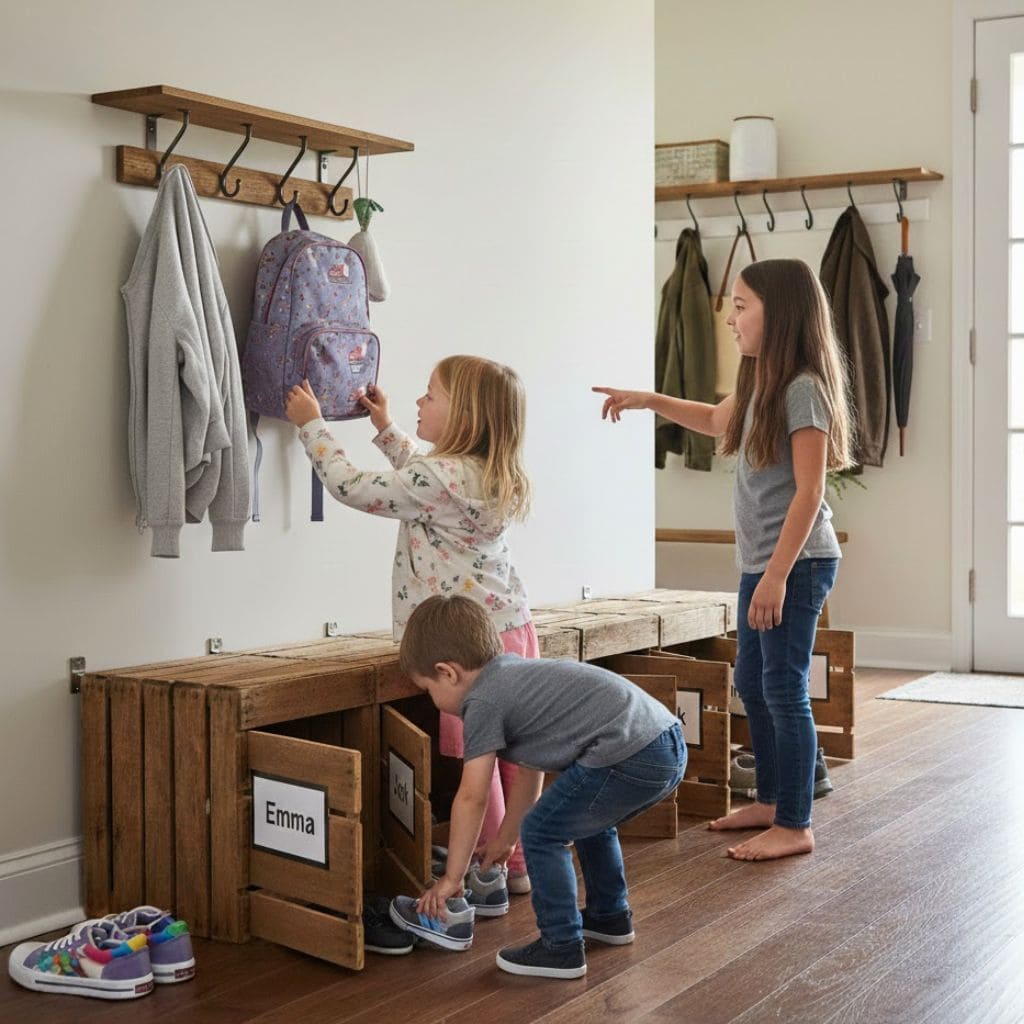
When the children came home that day, they paused at the doorway in visible curiosity.
Jack immediately asked which crate belonged to him, and Emma pointed confidently to the one labeled with his name.
Instead of kicking off their shoes mid-step, they bent down and placed them inside their designated crates.
Claire hung her jacket on the lower rack with only a small reminder. Emma adjusted her backpack strap carefully before hanging it. Jack needed encouragement to push his shoes fully inside, but he followed through.
What Changed Over Time
In the weeks that followed, the entrance gradually stopped being the loudest visual in the house. Mornings became smoother because no one searched frantically for missing sneakers.
Homework folders stayed upright inside backpacks instead of getting crushed beneath boots. Umbrellas hung neatly from the higher rack instead of dripping against the wall.
Moreover, the children stopped arguing about whose items were whose, because the labels made ownership visible without conversation.
Even Jack, who once left a trail from the door to the living room, began walking directly to his crate without being reminded.