How I Survived the “Why” Stage
There is a particular stage in early childhood that every parent hears about, but no one truly prepares you for the mental endurance it requires.
People smile and say, “Just wait until the why phase,” as if it is charming and temporary. It is charming, but it is also relentless, and for me, the most intense version of that stage belonged to Jack.
Two years ago, when Jack had just turned three, our household shifted into what felt like an endless interview session.
From the moment his feet hit the floor in the morning until his eyelids finally grew heavy at night, questions flowed continuously, layered one on top of the other, rarely satisfied by a single answer.
I had experienced this stage with Emma and Claire, but something about Jack’s temperament made it deeper and more persistent.
He did not ask casually. He asked with urgency. His eyebrows would pull together, his voice would rise slightly, and he would repeat the question until he sensed that I had truly engaged.
A Typical Morning With Three-Year-Old Jack
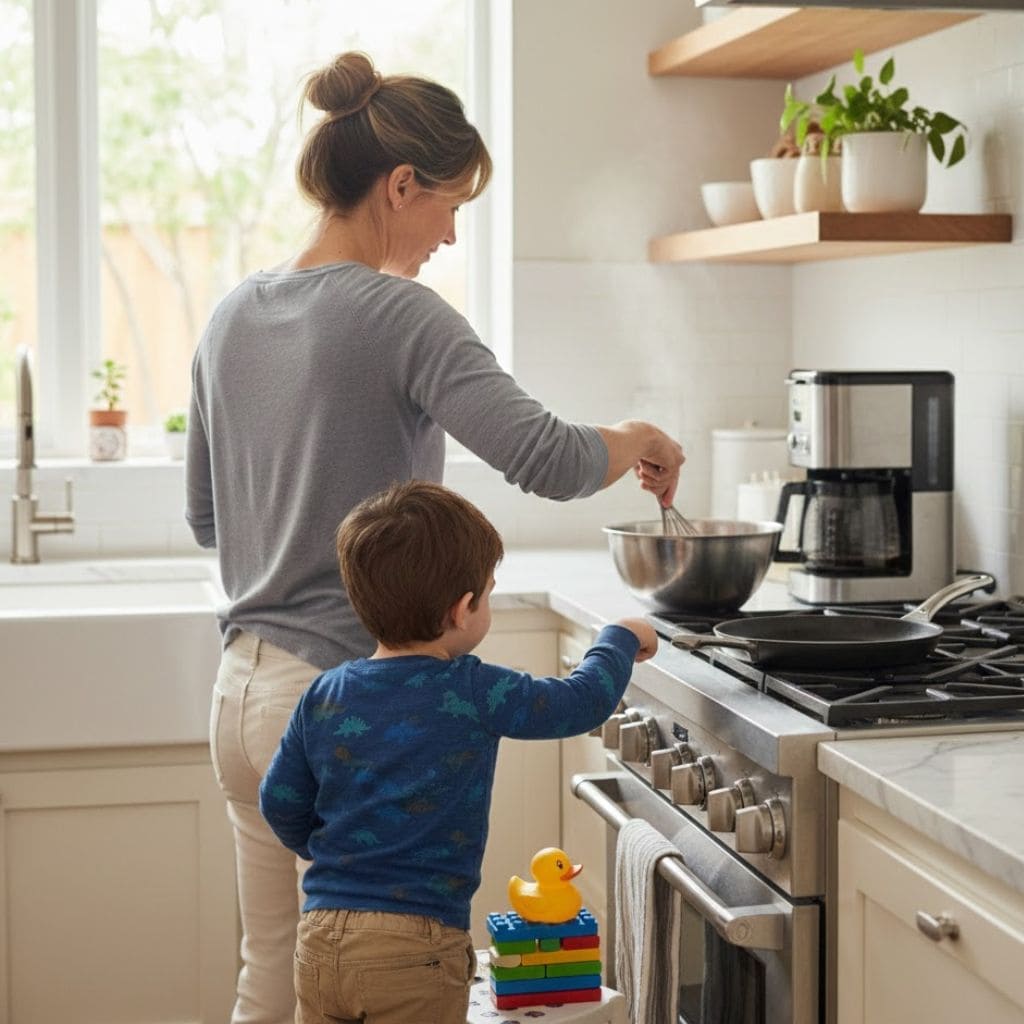
One morning still stands out clearly in my memory. It was early November, around 7:15 a.m., and I was standing in the kitchen scrambling eggs while the coffee brewed beside me.
The sky outside was pale gray, and frost clung lightly to the grass. Jack sat at the kitchen island in his dinosaur pajamas, swinging his legs.
“Mom, why is the sky white today?”
I explained that clouds were covering the blue sky.
“Why are there clouds?”
“Because water in the air gathers and forms them.”
“Why does water go in the air?”
I paused to flip the eggs. He did not pause.
“Why does water go up, Mom?”
By the time I tried to explain evaporation in simple language, he was already moving to the next question about why birds could fly and humans could not.
By 8:00 a.m., I felt as if I had delivered three miniature science lessons before even finishing breakfast.
The Emotional Impact on Me

At first, I responded enthusiastically. I appreciated his intelligence and his eagerness to understand the world.
However, after several weeks of uninterrupted questioning, I began to notice something uncomfortable in myself. I felt irritated more quickly.
If I was washing dishes or replying to a yoga client’s message and he began asking why the dishwasher made noise or why my phone vibrated, I felt tension rise in my shoulders.
My jaw tightened, and my answers shortened.
I did not want to become the mother who says, “Because I said so,” simply out of fatigue.
But some evenings, when I was stirring soup at 5:45 p.m. and trying to help Claire with homework while Emma practiced reading aloud, Jack’s questions felt like one more demand in an already full room.
The hardest part was the guilt that followed the irritation.
What Helped Me Understand Him Better

During that season, I revisited a book I had read before but now needed more deeply: The Whole-Brain Child by Daniel J. Siegel and Tina Payne Bryson.
I bought my copy at Barnes & Noble in Union two years earlier, and I remember flipping through it again at night while the house was finally quiet.
One idea struck me differently this time: children are not trying to exhaust us; they are wiring their brains.
Repetition strengthens neural connections. Curiosity builds integration between emotional and logical centers of the brain.
That perspective shifted my tone.
Jack was not challenging my authority. He was building his understanding of how the world works and testing whether his questions were safe.
The Systems I Created to Protect My Energy
The first change I made was practical. I introduced what we called “Question Time.”
Each afternoon around 4:00 p.m., when I was not cooking or multitasking, we sat at the dining table together for fifteen minutes.
I gave Jack a small blue spiral notebook, and we titled it “Jack’s Big Questions” in bold letters on the front.
Whenever he asked something complex during the day and I could not answer immediately, I would say gently, “That is a good question. Let’s write it in your book and explore it later.”
The notebook quickly filled with entries like:
- Why do people get old?
- Why do we need bones?
- Why do dogs bark at night?
- Why does rain make mud?
Instead of feeling ambushed by questions at inconvenient moments, I began anticipating our daily exploration time.
This shift reduced my stress dramatically.
How I Changed the Way I Answered
I also stopped over-explaining. As adults, we often believe that more information equals better parenting. In reality, three-year-olds need simplicity.
When Jack asked why leaves fall, instead of explaining full seasonal cycles and chlorophyll breakdown, I began answering in one clear sentence: “Leaves fall because trees rest in winter so they can grow again in spring.”
If he followed with another why, I sometimes asked, “What do you think?” That question redirected his thinking and reminded him that he was capable of forming ideas, not just collecting mine.
The Hardest Evening
One evening in particular tested me. It was around 6:10 p.m., dinner was late, and I had burned a tray of roasted vegetables while answering a client email.
Jack stood beside me asking why carrots change color when cooked. At that moment, I felt exhaustion more than patience.
Instead of snapping, I knelt down to his height and said, “I really want to answer you well, but I need ten quiet minutes to finish cooking. After we eat, we will talk about carrots.”
He looked disappointed, but he waited. That boundary was healthier than forcing cheerfulness.
What I Learned From That Stage
Looking back now, I see that the “why” stage was less about information and more about trust. Jack needed reassurance that his curiosity did not annoy me. He needed to feel that his thoughts mattered.
There were days I handled it beautifully, while there were days I did not.
But gradually, the questions slowed. At five years old now, Jack still asks thoughtful questions, but they are less frantic and more reflective.
Passing through the knowing stage is not about surviving noise. It is about learning how to guide curiosity without losing yourself in the process.
And if you are in the middle of that season right now, feeling stretched thin by endless questions, know that your exhaustion does not mean you are failing.
It means you are raising a child who feels safe enough to ask, and that is something powerful.