This Book Changed My Parenting This Year
For many years, I believed I was a steady and reasonable parent, the kind who values calm conversation, clear expectations, and respectful correction.
I do not shout often, I rarely punish impulsively, and I try to explain my reasoning to my children instead of simply demanding obedience. In my mind, I was teaching them emotional maturity by modeling logic.
But earlier this year, I began to realize that calm parenting is not always the same as connected parenting.
Some months ago, I stopped by The Book House on Morris Avenue in Union, New Jersey. I was wandering slowly between shelves, coffee in hand, enjoying the silence after teaching yoga.
That is when I noticed The Whole-Brain Child displayed near the psychology section.
I opened it casually and began reading the introduction while standing there. One line stopped me immediately:
“When children are overwhelmed by big emotions, they literally can’t use the upstairs brain.”
The authors explain the brain in simple terms: the “upstairs brain” is responsible for logic, reasoning, and self-control, while the “downstairs brain” governs instinct, emotion, and reaction.
When children are flooded with emotion, the upstairs brain temporarily goes offline.
My Parenting Before This Book

Before reading this book, when Jack cried loudly because he could not have a second dessert, I calmly explained the rule.
When Claire became upset over something small, I reasoned with her and encouraged perspective.
When Emma retreated into silence after a difficult day, I gently tried to talk her through the situation with logic.
I believed that reasoning built resilience. What I had not fully considered was timing.
Siegel and Bryson write:
“The key to helping kids calm down is to connect with them first.”
It means that before redirecting behavior or correcting choices, I must step into their emotional experience.
Instead of beginning with instruction, I begin with understanding.
The Concept That Changed My Response
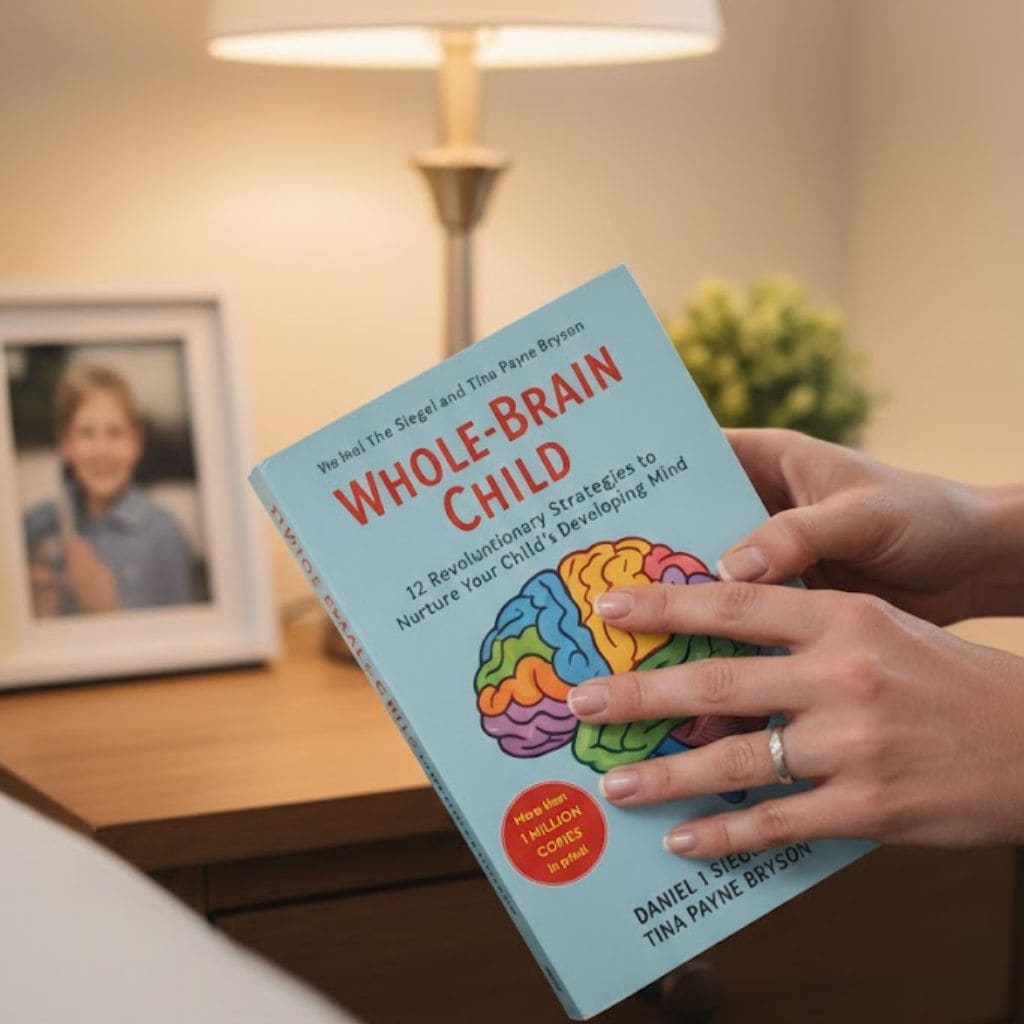
One of the most powerful ideas in the book is what the authors call “Name It to Tame It.”
They explain that when we help children put words to their feelings, we activate parts of the brain that calm emotional intensity.
As they write:
“When we help our kids tell their story, we help them make sense of their feelings.”
I realized how often I had minimized emotions unintentionally by jumping straight to solutions.
A Real Moment at Home
Two weeks after beginning the book, I had my first real opportunity to apply what I was learning.
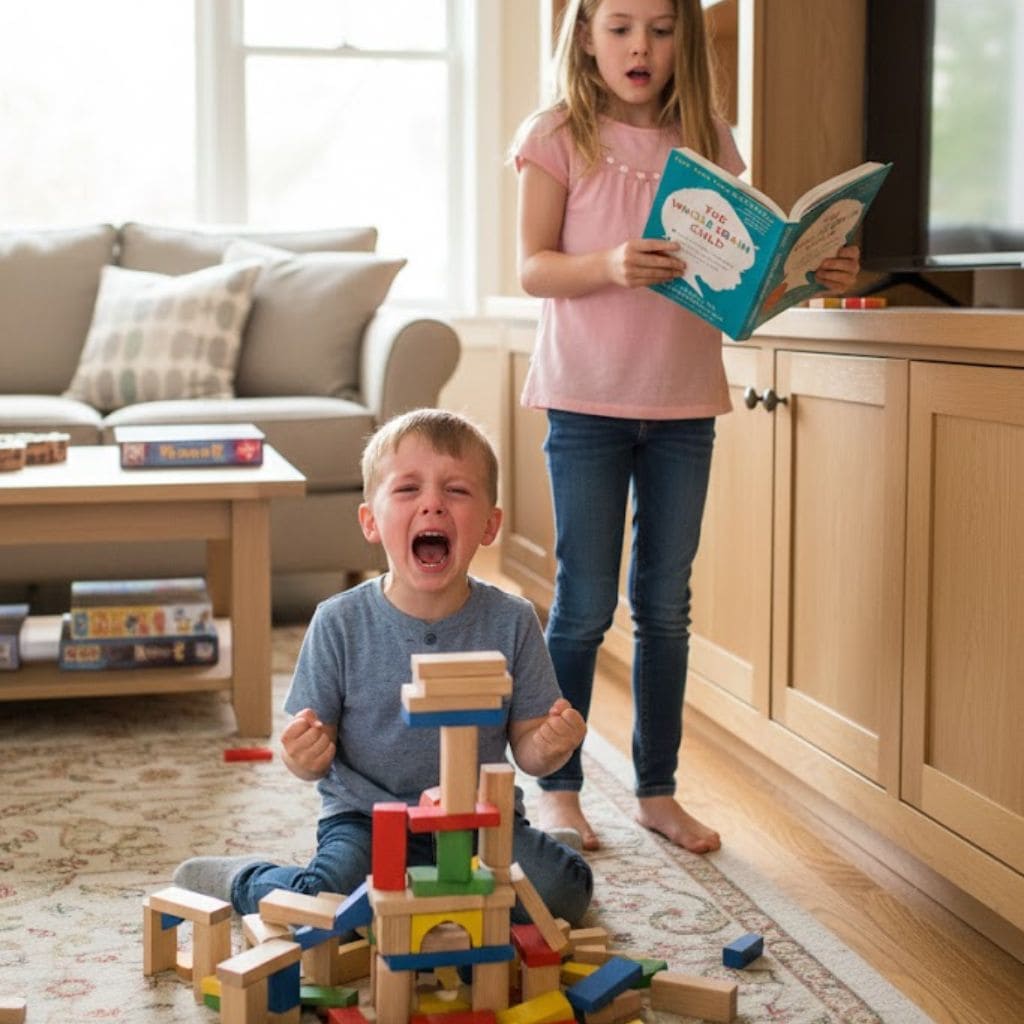
Jack had spent nearly forty minutes building a block structure in the living room, focused in a way that is rare for him.
Claire accidentally knocked part of it down while reaching for a book, and within seconds, the room filled with Jack’s frustration.
In the past, I would have said, “It was an accident. Calm down. You can rebuild it.”
This time, I knelt beside him and said, “You worked really hard on that, and it feels awful to see it fall.”
He continued crying, but he looked at me instead of away from me. “You’re really frustrated right now,” I added quietly.
His crying softened.
Only after that moment did I gently say, “Let’s see how we can fix it together.”
The situation resolved more quickly than usual, but what mattered most was that he felt understood before being corrected.
What Changed in Me

Another line in the book that deeply affected me reads:
“We want to help our children use both sides of their brain – logic and emotion – so they can integrate their experiences.”
That word, integrate, reshaped how I view discipline. Parenting is about helping children link emotion with reasoning over time.
I began to pause more often before reacting. I became more aware of my own tone.
The authors remind parents that children borrow our nervous systems, and I noticed how frequently I had been trying to manage behavior quickly instead of regulating the atmosphere gently.
One afternoon, when Emma came home unusually quiet, I resisted the urge to press her with questions. Instead, I said, “You seem like something is weighing on you. I’m here if you want to talk.”
Why This Book Matters in Our House
Our home did not become magically peaceful after I finished reading The Whole-Brain Child.
Jack still reacts loudly sometimes. Claire still feels deeply. Emma still withdraws occasionally when she needs space.
But my response is different. I am less focused on winning arguments and more focused on building integration.
I am slower to correct and quicker to connect. I no longer see emotional outbursts as defiance; I see them as developing brains learning regulation.
Perhaps the most comforting line in the book is this:
“Parenting isn’t about perfection. It’s about showing up and helping our kids make sense of their world.”
When I walked into The Book House that morning, I was simply wandering between shelves. Yet this book quietly reshaped the way I understand my children’s reactions and, in many ways, my own.
And sometimes, the most meaningful changes in motherhood do not come from grand resolutions, but from learning to pause, kneel down, and say, “I see what you’re feeling.”