If All I Have Is Flour, Yogurt, and Honey, I Make These Pancakes
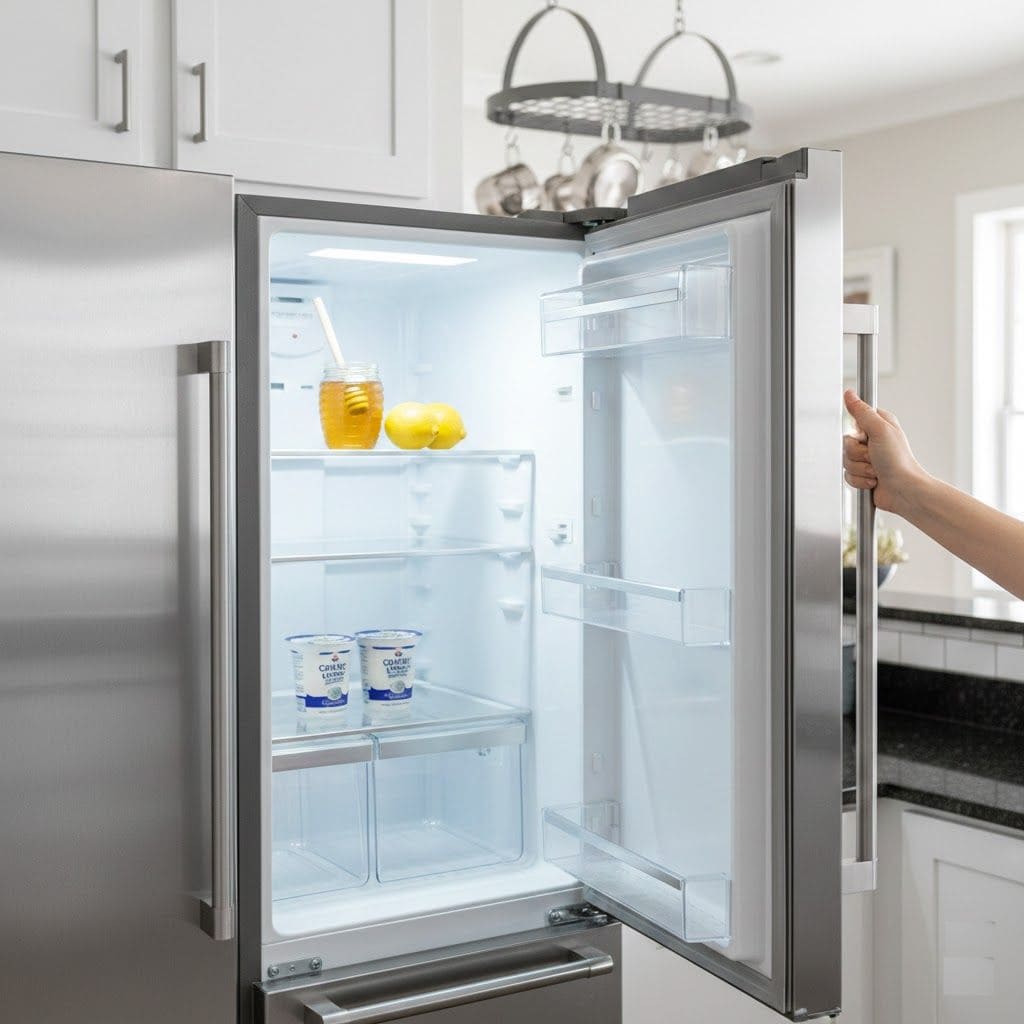
There are days when my kitchen feels abundant and organized, and then there are days when I open the fridge and see one lonely container of yogurt, a half-squeezed lemon, and a jar of honey with sticky fingerprints around the lid.
Last Tuesday was one of those days.
I had just finished teaching two back-to-back yoga sessions, school pick-up ran late, and by the time we walked through the door it was already past four.
Emma was hungry in the quiet way she gets when she’s trying to be patient. Claire was asking what snack we were having before I even set my bag down.
Jack opened the fridge, stared inside, and said dramatically, “Mom… there’s nothing.”
Haha, flour in the pantry, plain Greek yogurt in the fridge, and honey in the cabinet. And honestly, that’s enough.
I learned this pancake recipe about two years ago from a small home-cooking account I follow on Instagram. The woman posted a video saying, “If you only have flour and yogurt, you can still feed your family.”
I saved it, tried it the next morning, and it worked. Since then, it has quietly become one of my most reliable emergency recipes.
The Exact Ingredients I Use
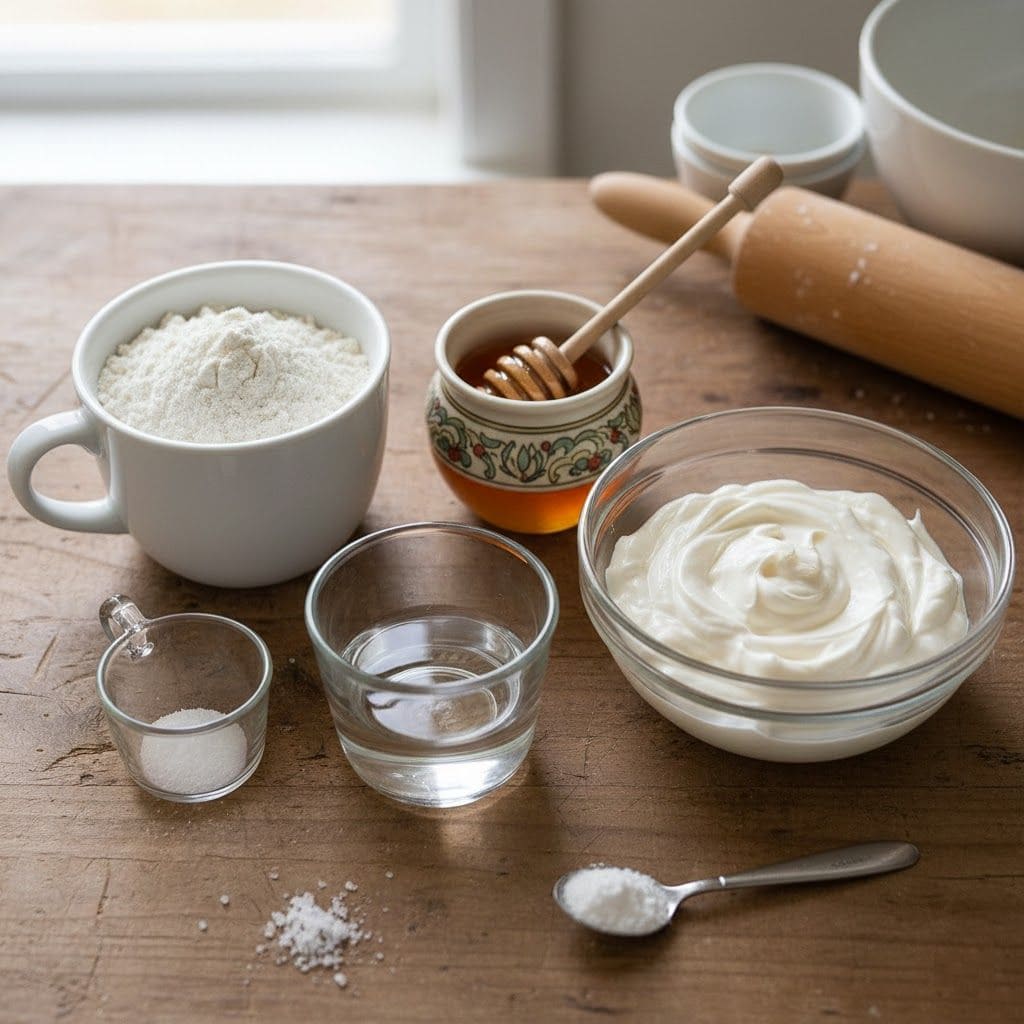
For one batch that feeds my three children and leaves a few for Liam and me, I use:
- 1 cup all-purpose flour (about 120 grams)
- ¾ cup plain Greek yogurt (full-fat gives the best texture)
- 1 to 2 tablespoons honey
- ¼ cup water, added gradually
- A pinch of salt
- ½ teaspoon baking powder (if I have it, but not required)
If the yogurt is very thick, which Greek yogurt usually is, I start closer to ¼ cup water. If it’s thinner, I reduce the water slightly.
Mixing the Batter (What It Should Actually Look Like)
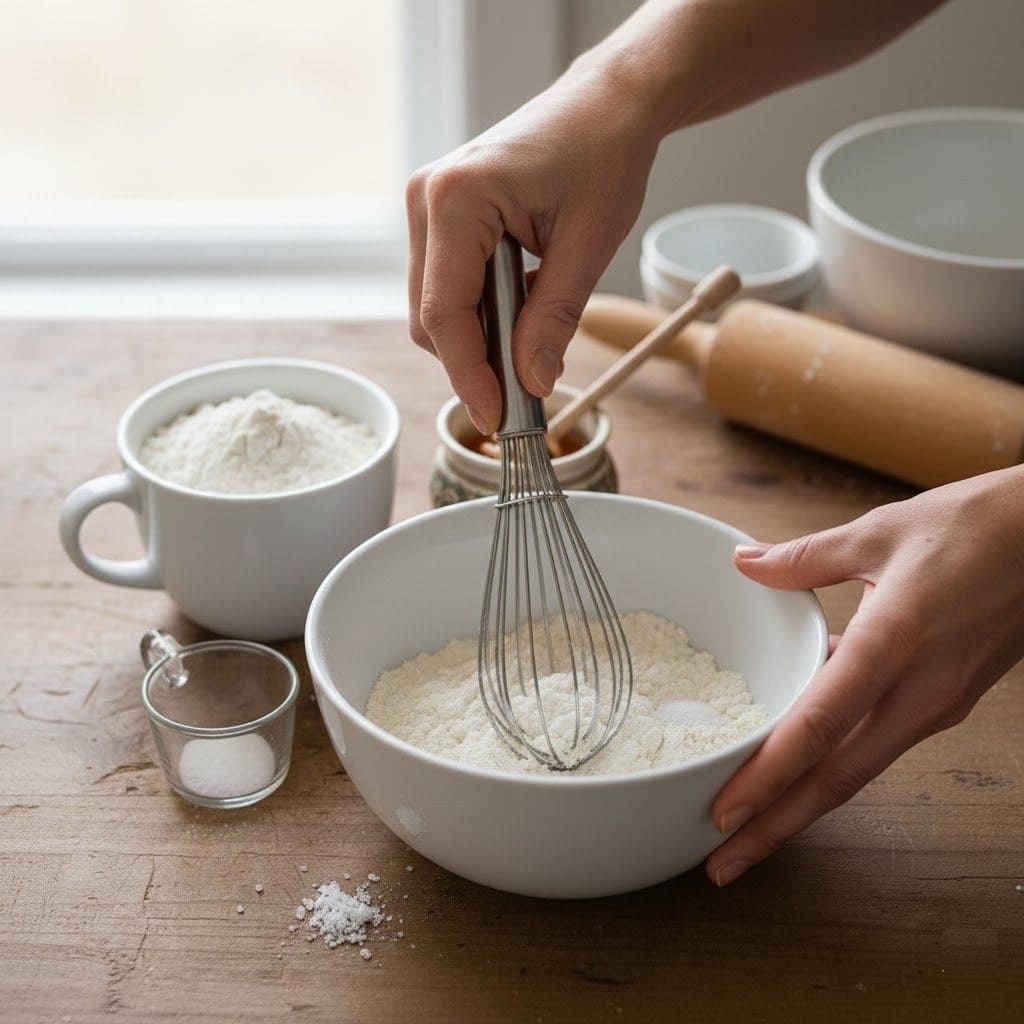
I start by putting the flour, salt, and baking powder into a medium bowl and whisking them together so everything distributes evenly.
In a separate bowl, I stir the yogurt and honey together until smooth. Sometimes the honey sits stubbornly at the bottom, so I warm the spoon slightly under hot water before stirring. That helps it blend faster.
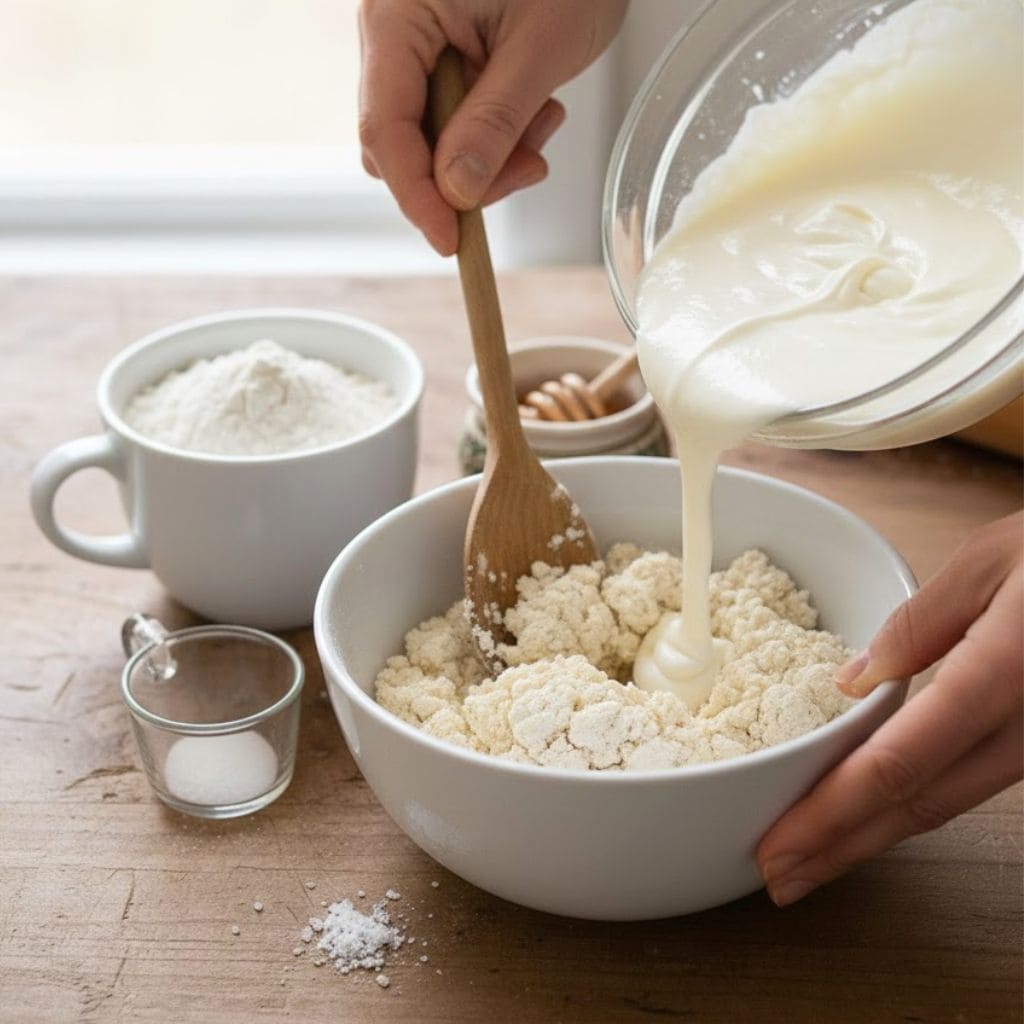
Then I combine the yogurt mixture into the flour slowly. At first it will look dry and clumpy, that’s normal. I add water one tablespoon at a time and stir gently with a wooden spoon.
The texture I aim for is thick but scoopable. If you lift the spoon, the batter should slowly fall back into the bowl in a heavy ribbon, not pour like crepe batter. If it looks glossy and smooth but not runny, it’s right.
Note: do not overmix. Once the flour disappears, stop. Overmixing makes these pancakes chewy instead of soft.
I let the batter rest for about 10 minutes while I heat the pan. That resting time makes a noticeable difference because the flour absorbs moisture and softens.
Cooking Them Without Burning the Honey
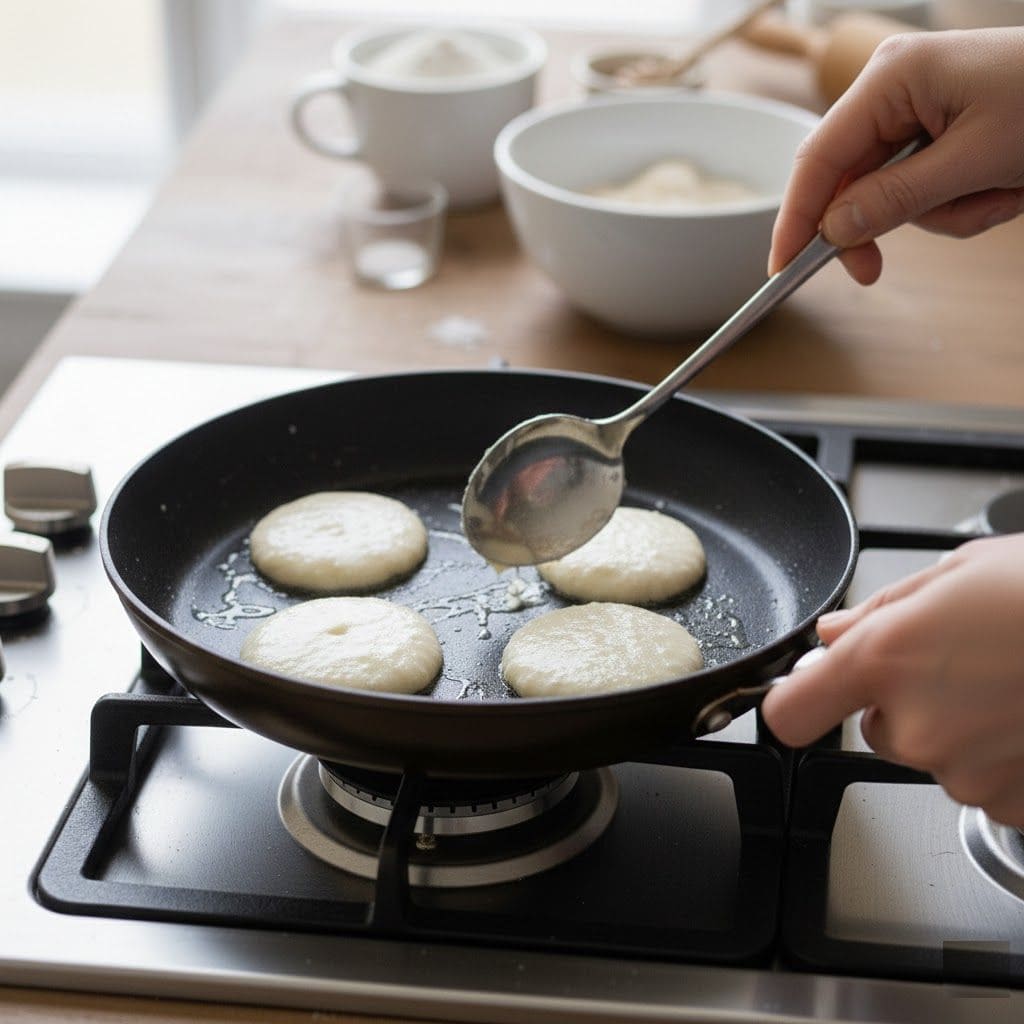
I heat a non-stick pan over medium-low heat. This is critical. If the heat is too high, the honey caramelizes quickly and the outside browns before the inside cooks.
Then I add a small amount of butter, just enough to coat the surface lightly.
Using a spoon, I drop about two tablespoons of batter per pancake. They spread slightly on their own, but I sometimes smooth the top gently with the back of the spoon into a small 3 to 4 inch circle.
After about 2 to 3 minutes, tiny bubbles appear and the edges begin to look set. That’s when I flip them. The second side cooks a little faster, usually another 2 minutes.
They come out golden, not fluffy like traditional diner pancakes, but soft and tender with slightly crisp edges.
If the center feels undercooked when you press lightly, lower the heat and give them another minute.
What My Kids Add (Because They Always Add Something)
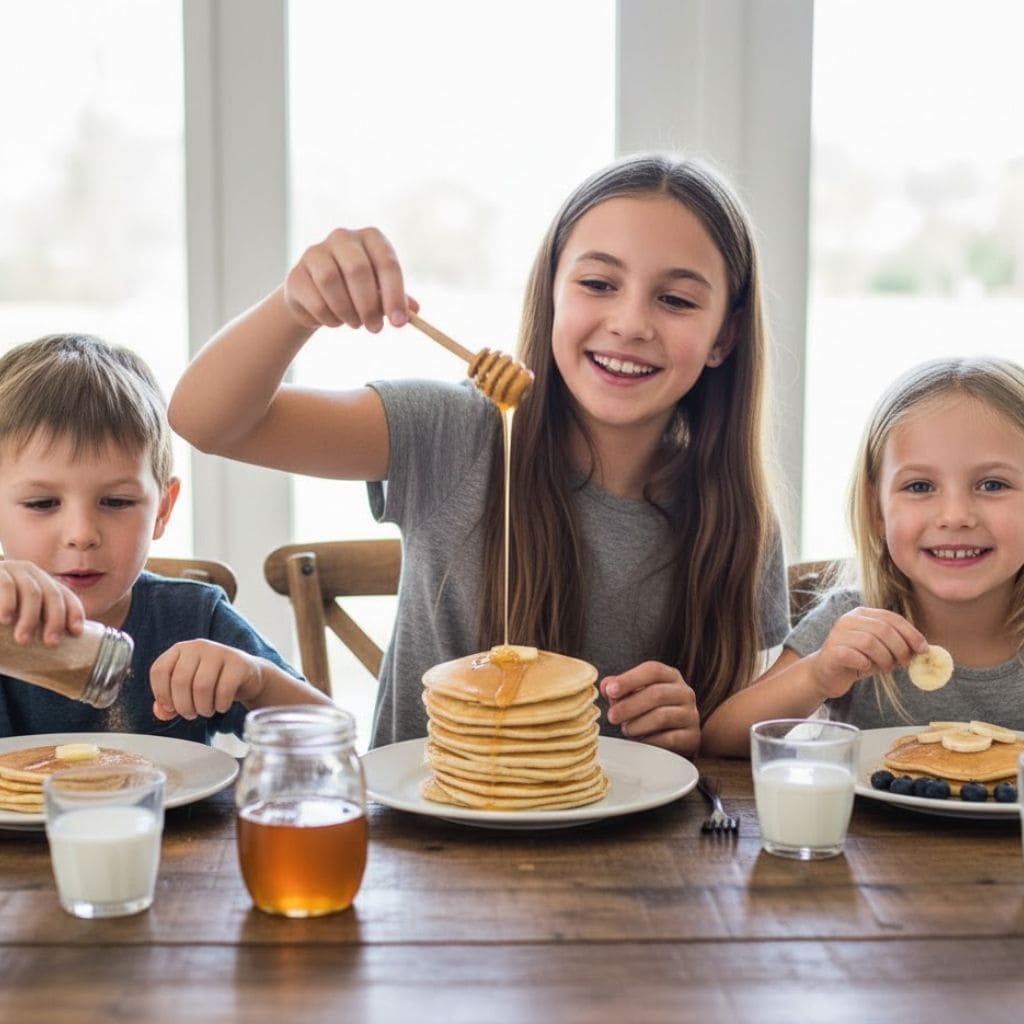
Emma usually eats hers plain with a thin drizzle of honey. She likes the simplicity and says they taste warm, which makes me smile every time.
Claire loves fruit, so I often press a few blueberries or thin banana slices into the batter after pouring it into the pan. The fruit softens while cooking and makes the pancakes slightly sweeter.
Jack claims he doesn’t like fruit in pancakes, but he will accept a small spread of butter on top. Sometimes he sprinkles cinnamon over them and pretends it was his idea all along.
Even Liam eats them without hesitation, usually grabbing one straight from the cooling rack before I can stack them properly.
Why Yogurt Makes a Difference
Greek yogurt contains protein and calcium, which makes these pancakes more filling than flour alone.
The acidity in yogurt also helps create tenderness in the batter, especially when paired with baking powder.
When I make these in the afternoon, the kids stay satisfied longer compared to packaged snacks. I don’t get the immediate “I’m hungry again” 30 minutes later.
Small Adjustments I Make
If the batter feels too thick, I add another tablespoon of water.
If it feels too sour, especially if the yogurt is tangy, I increase the honey slightly or add a teaspoon of sugar.
If I want them richer, I stir in one tablespoon of melted butter before cooking.
If I have time, I sometimes add a dash of vanilla extract, but honestly, they don’t need it.
Important Notes
If someone in your household has dairy sensitivity, this recipe won’t work unless you substitute with a dairy-free yogurt that has a similar thickness.
Honey should not be given to children under one year old.
And after cooking, I rinse the pan right away because honey hardens as it cools and becomes sticky if left too long.